
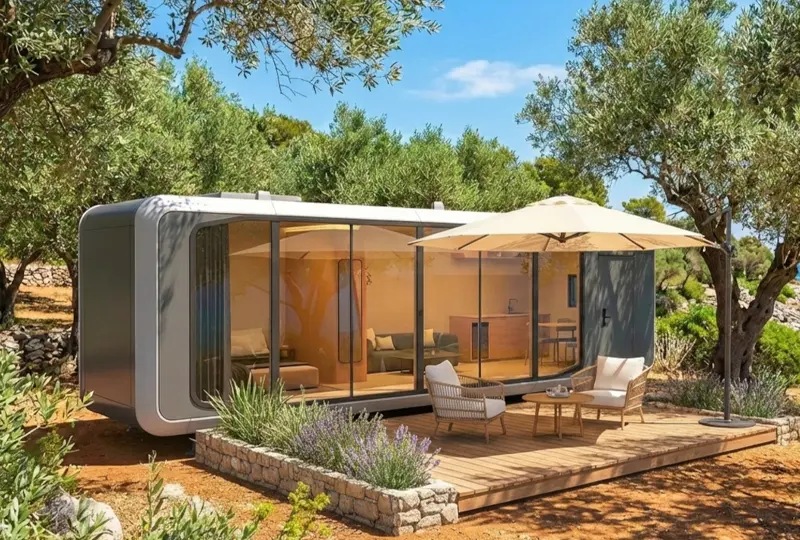
When investing in a capsule house, one of the most important questions buyers ask is:
How long can a capsule house last?
For private buyers, lifespan affects long-term value.
For resort developers, durability directly impacts operating costs, guest experience, and return on investment.
A well-designed capsule house is not simply a temporary structure. With proper engineering, high-quality materials, and regular maintenance, modern capsule houses can provide reliable performance for many years.
At PodVoyager, we manufacture customized capsule houses and modular accommodation solutions in Linyi, Shandong, China, focusing on structural durability, climate adaptability, and long-term commercial use.
This guide explains the expected lifespan of capsule houses, the factors that influence durability, and how to maximize their service life.
What Is the Average Lifespan of a Capsule House?
The lifespan of a capsule house depends on:
- Structural materials
- Manufacturing quality
- Installation conditions
- Local climate
- Maintenance practices
Generally, a professionally manufactured capsule house can last:
15–30 years or more with proper maintenance.
High-quality modular accommodation systems are designed for long-term commercial applications, including:
- Glamping resorts
- Eco-tourism projects
- Boutique hotels
- Scenic area accommodations
- Private vacation properties
The lifespan is comparable to many traditional accommodation structures when proper materials and engineering standards are applied.
The Main Factors That Determine Capsule House Lifespan
1. Structural Frame Quality
The structural frame is the foundation of capsule house durability.
High-quality capsule houses typically use:
- Galvanized steel frames
- Aluminum alloy structures
- Corrosion-resistant materials
- Reinforced connection systems
A strong structural system provides:
- Wind resistance
- Load-bearing capability
- Long-term stability
- Better performance in extreme environments
For projects located in coastal, mountain, or high-humidity regions, structural protection becomes especially important.
2. Exterior Material Performance
The exterior shell protects the capsule house from environmental conditions.
Important factors include:
- UV resistance
- Waterproof performance
- Corrosion resistance
- Temperature adaptation
Common exterior materials include:
- Aluminum panels
- Composite panels
- Weather-resistant coatings
- Insulated wall systems
High-quality exterior materials reduce:
- Repair frequency
- Weather damage
- Long-term maintenance costs
3. Insulation and Climate Adaptability
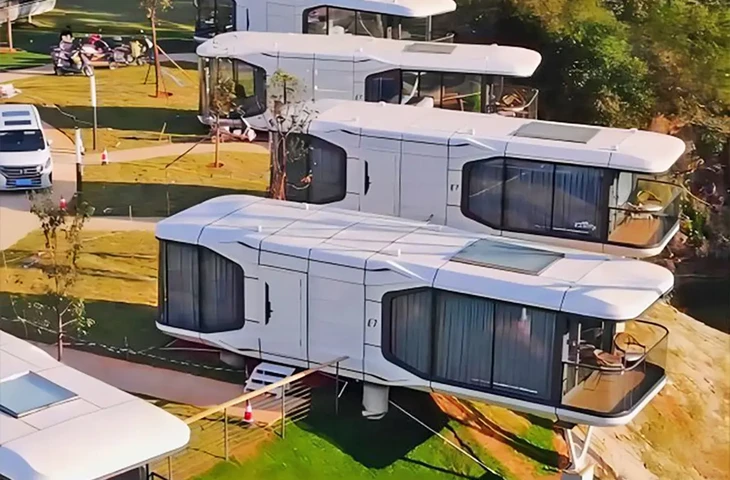
A capsule house must perform well in different climates.
Professional designs consider:
- Hot summers
- Cold winters
- Heavy rain
- Strong winds
- Coastal humidity
Effective insulation systems help maintain:
- Indoor comfort
- Lower energy consumption
- Stable indoor temperatures
This is particularly important for commercial projects operating throughout the year.
How Different Environments Affect Capsule House Durability
Coastal Areas
Challenges:
- Salt air corrosion
- High humidity
- Strong winds
Recommended solutions:
- Anti-corrosion structural treatment
- Waterproof sealing systems
- Marine-grade materials
Mountain Regions
Challenges:
- Snow loads
- Temperature changes
- Wind exposure
Recommended solutions:
- Strong structural reinforcement
- High-performance insulation
- Weather-resistant exterior systems
Desert Environments
Challenges:
- Extreme heat
- UV exposure
- Large temperature differences
Recommended solutions:
- Heat-reflective materials
- Advanced insulation
- Efficient ventilation systems
Capsule House Maintenance Requirements
One advantage of modern modular accommodation is relatively low maintenance.
However, regular inspections help extend service life.
Recommended maintenance includes:
Annual Structural Inspection
Check:
- Frame connections
- Exterior panels
- Sealing systems
Waterproof System Inspection
Important areas include:
- Roof joints
- Window connections
- Exterior seams
Equipment Maintenance
Including:
- Air conditioning systems
- Electrical systems
- Smart devices
- Plumbing equipment
Interior Maintenance
For hospitality projects:
- Furniture inspection
- Flooring maintenance
- Bathroom equipment checks
Regular maintenance improves guest experience and reduces unexpected repair costs.
Are Capsule Houses Suitable for Commercial Resort Projects?
Many investors initially assume capsule houses are only suitable for temporary accommodation.
However, modern capsule houses are increasingly used for:
- Luxury glamping resorts
- Eco-lodges
- Boutique tourism projects
- Scenic area accommodation
Commercial projects require:
- Long operating life
- Stable performance
- Easy maintenance
- Guest comfort
Professional capsule houses are designed specifically to meet these requirements.
Capsule House Lifespan Compared With Traditional Buildings
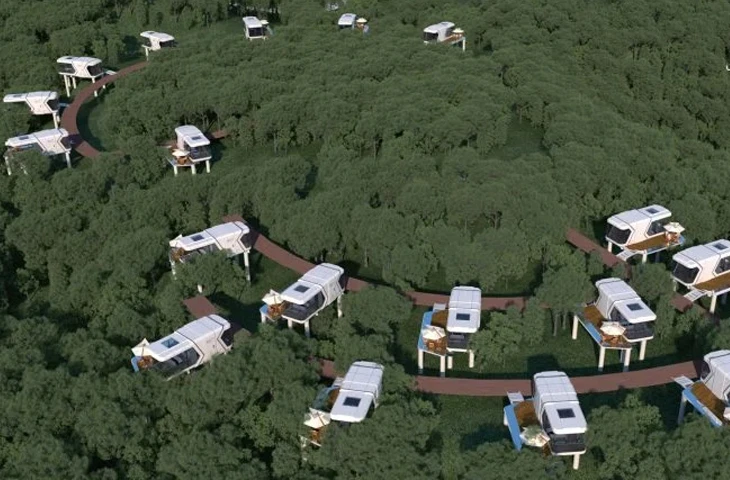
Traditional buildings often have long theoretical lifespans, but they also involve:
- Complex construction processes
- Higher maintenance requirements
- Difficult renovation work
Capsule houses provide advantages such as:
Factory-Controlled Manufacturing
Quality is controlled before delivery.
Easier Component Replacement
Individual systems can often be repaired or upgraded.
Flexible Expansion
New units can be added without major reconstruction.
Lower Lifecycle Cost
The total cost over the operating period can be highly competitive.
How PodVoyager Ensures Long-Term Capsule House Quality
At PodVoyager, we focus on building capsule houses that are suitable for real-world commercial applications.
Our approach includes:
- Professional structural engineering
- Durable material selection
- Factory quality control
- Climate adaptation solutions
- Custom project design
Based in Linyi, Shandong, China, we provide modular accommodation solutions for international clients across tourism, hospitality, and private development sectors.
How to Choose a Durable Capsule House Manufacturer
Before purchasing, buyers should evaluate:
Factory Capability
Does the supplier have:
- Real manufacturing facilities?
- Engineering teams?
- Quality inspection processes?
Material Transparency
A reliable manufacturer should clearly explain:
- Frame materials
- Insulation systems
- Exterior finishes
- Glass specifications
Project Experience
Look for experience in:
- Resort projects
- International shipments
- Different climate conditions
Conclusion
A well-designed capsule house can provide decades of reliable service when built with proper materials, engineering, and maintenance.
The real lifespan of a capsule house depends not only on the product itself but also on the manufacturer’s technical capability and quality standards.
For investors developing glamping resorts, eco-tourism destinations, or modern accommodation projects, choosing a durable capsule house manufacturer is the key to protecting long-term investment value.
Explore more at https://podvoyager.com/ and discover durable modular accommodation solutions from PodVoyager.
