
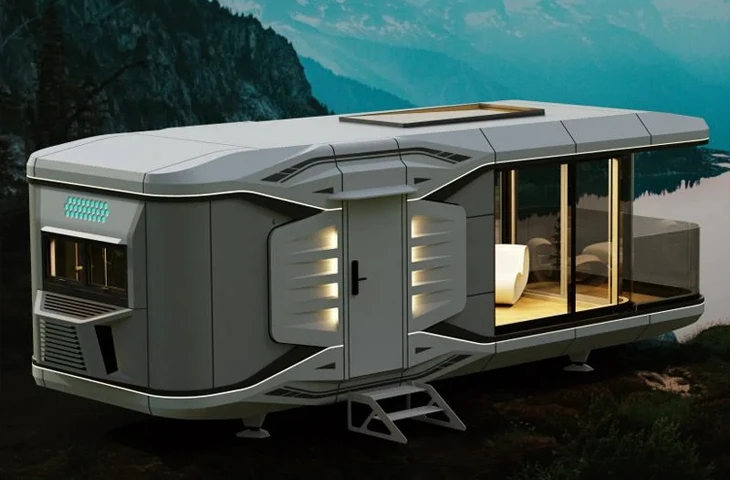
When purchasing a capsule house from China, many buyers focus on the final appearance, floor plan, and price. However, the real difference between a reliable manufacturer and an ordinary supplier is hidden behind the production process.
A professional capsule house factory in China does not simply assemble a finished product. It manages the complete process from concept design, structural engineering, material selection, factory production, quality inspection, packaging, and international delivery.
At PodVoyager, we specialize in manufacturing customized capsule houses and modular accommodation solutions in Linyi, Shandong, China. From individual glamping units to large-scale tourism projects, we provide complete manufacturing solutions designed for global markets.
This article explains how a professional capsule house factory transforms an idea into a finished modular accommodation unit.
Why the Manufacturing Process Matters for Capsule Houses
A capsule house may look simple from the outside, but it is actually an integrated architectural system.
A high-quality capsule house involves multiple technical components:
- Structural frame system
- Exterior protection system
- Insulation system
- Glass and window system
- Electrical installation
- Plumbing system
- Interior finishing
- Smart control systems
Every part affects:
- Durability
- Safety
- Energy efficiency
- User experience
- Long-term maintenance costs
Factory-based production allows manufacturers to control every stage more effectively compared with traditional on-site construction.
Step 1: Project Consultation and Requirement Analysis
Every capsule house project starts with understanding the client’s requirements.
A professional manufacturer first evaluates:
- Project location
- Climate conditions
- Intended usage
- Target customers
- Budget range
- Transportation requirements
Different projects require different solutions.
For example:
A mountain resort may require:
- Strong wind resistance
- Better insulation
- Snow-load consideration
A tropical glamping project may require:
- Heat insulation
- Ventilation design
- Moisture resistance
A luxury resort project may focus more on:
- Panoramic glass design
- Premium interiors
- Smart systems
Understanding the application scenario is the foundation of successful capsule house manufacturing.
Step 2: Capsule House Design and Engineering Development
After project requirements are confirmed, the design stage begins.
This process usually includes:
Architectural Design
The manufacturer develops:
- Exterior appearance
- Space layout
- Window positioning
- Entrance design
- Outdoor connection areas
The goal is to balance aesthetics and functionality.
Structural Engineering
Engineers evaluate:
- Structural strength
- Weight distribution
- Transportation limitations
- Installation requirements
The capsule house must remain stable during:
- Manufacturing
- Transportation
- Installation
- Long-term operation
System Planning
Modern capsule houses integrate multiple systems:
- Electrical layout
- Plumbing design
- HVAC planning
- Smart home functions
A professional factory considers these systems before production begins.
Step 3: Material Selection and Preparation
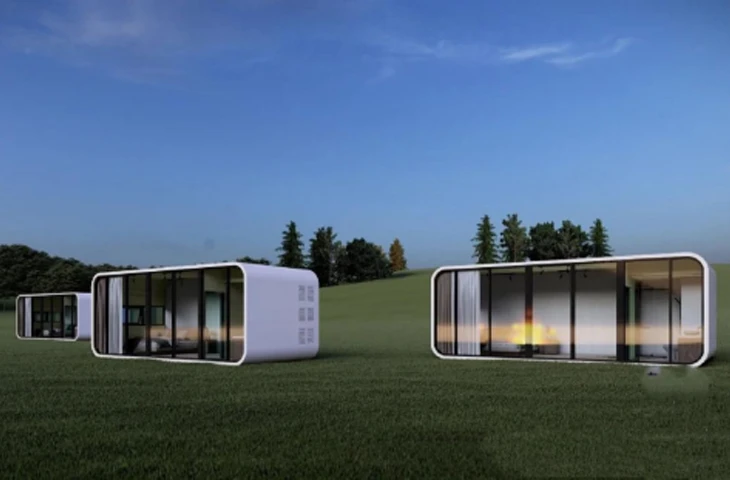
Material quality directly affects the lifespan of a capsule house.
Professional manufacturers carefully select materials for different applications.
Key components include:
Structural Frame
The frame provides the core strength of the building.
Important considerations include:
- Load-bearing capability
- Corrosion resistance
- Structural stability
Exterior Materials
The exterior shell protects the capsule house from environmental conditions.
Common requirements include:
- Waterproof performance
- UV resistance
- Weather durability
Glass System
Many capsule houses feature large panoramic windows.
High-quality glass systems help provide:
- Better views
- Natural lighting
- Thermal insulation
- Safety performance
Interior Materials
For commercial projects such as resorts and glamping sites, interiors need to balance:
- Appearance
- Comfort
- Durability
- Easy maintenance
Step 4: Factory Production Process
Once materials and designs are confirmed, manufacturing begins.
Unlike traditional construction, most production happens inside a controlled factory environment.
Structural Frame Manufacturing
The first stage is producing the main structure.
Workers complete:
- Cutting
- Welding
- Assembly
- Structural inspection
The frame creates the foundation of the capsule house.
Exterior Shell Installation
After the structure is completed, the exterior system is installed.
This includes:
- Wall panels
- Roof systems
- Waterproof layers
- Exterior finishes
The purpose is to create a durable protective envelope.
Interior Assembly
The interior production stage includes:
- Flooring installation
- Wall finishing
- Furniture installation
- Bathroom assembly
- Lighting installation
Factory production improves consistency because each process follows a standardized workflow.
Step 5: Electrical, Plumbing and Smart System Integration
Modern capsule houses are not simply rooms.
They are complete living or hospitality spaces.
During manufacturing, factories integrate:
Electrical Systems
Including:
- Lighting
- Power outlets
- Control systems
Plumbing Systems
Including:
- Bathroom facilities
- Water supply
- Drainage systems
Smart Features
Depending on project requirements:
- Smart locks
- Automated curtains
- Intelligent lighting
- Remote monitoring
Integration before delivery reduces installation complexity at the project site.
Step 6: Quality Inspection Before Delivery
Quality control is one of the most important stages in capsule house manufacturing.
Before shipment, professional factories inspect:
Structural Quality
Checking:
- Frame connections
- Welding quality
- Stability
Waterproof Performance
Checking:
- Sealing areas
- Roof connections
- Window systems
Electrical Safety
Checking:
- Wiring systems
- Electrical components
- Equipment operation
Interior Quality
Checking:
- Finishing details
- Furniture installation
- Functional performance
A complete inspection process helps ensure the capsule house arrives ready for installation.
Step 7: Packaging and International Transportation
For overseas projects, transportation planning is essential.
A professional capsule house factory considers:
- Shipping dimensions
- Container loading
- Protective packaging
- On-site unloading requirements
The design stage should already consider export conditions.
This helps reduce:
- Transportation risks
- Additional costs
- Installation difficulties
Step 8: On-Site Installation and Project Support
After arriving at the destination, the capsule house is installed according to the project plan.
Installation typically includes:
- Positioning the unit
- Connecting utilities
- Completing final adjustments
- Testing all systems
For larger projects, manufacturers may provide:
- Installation guidance
- Technical support
- Project coordination
How Factory Manufacturing Improves Capsule House Quality
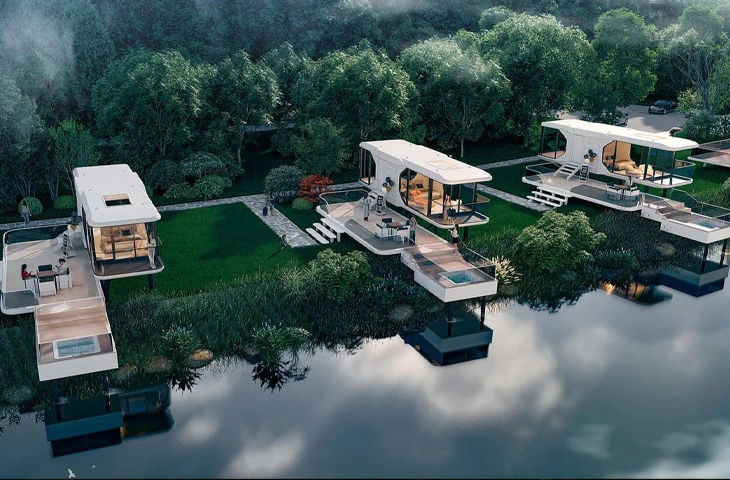
Compared with traditional construction methods, factory production provides several advantages.
Better Quality Control
Production happens in a controlled environment instead of being affected by:
- Weather conditions
- Site limitations
- Labor availability
More Accurate Manufacturing
Factory processes allow:
- Standardized production
- Repeatable quality
- Better detail control
Faster Project Completion
Because many processes happen simultaneously, factory manufacturing can significantly reduce project timelines.
Why Choose PodVoyager as Your Capsule House Factory in China
Located in Linyi, Shandong, China, PodVoyager focuses on customized capsule houses and modular space solutions for global customers.
Our manufacturing capabilities include:
- Custom capsule house design
- Modular accommodation production
- Complete interior integration
- Quality inspection
- International delivery support
We work with:
- Glamping resort developers
- Tourism investors
- Hospitality operators
- Private project owners
Our goal is to provide not only a capsule house product, but a complete project solution from concept to delivery.
What Buyers Should Check Before Choosing a Capsule House Factory
Before selecting a supplier, buyers should evaluate:
Factory Experience
Does the company have:
- Real production facilities?
- Engineering capability?
- Completed projects?
Manufacturing Process
Ask about:
- Material selection
- Quality inspection
- Production workflow
Export Capability
For international projects, confirm:
- Packaging methods
- Shipping experience
- Installation support
Customization Ability
A good manufacturer should help optimize:
- Design
- Function
- Cost
- Project requirements
Conclusion
A capsule house is not created by simply assembling materials. It is the result of a complete manufacturing system involving design, engineering, production, inspection, and delivery.
Choosing the right capsule house factory in China means choosing a partner that can control quality throughout the entire process.
For investors developing glamping resorts, tourism destinations, and modular accommodation projects, working with an experienced manufacturer reduces risks and improves long-term project value.
From initial design to final installation, PodVoyager provides complete capsule house manufacturing solutions for global projects.
