
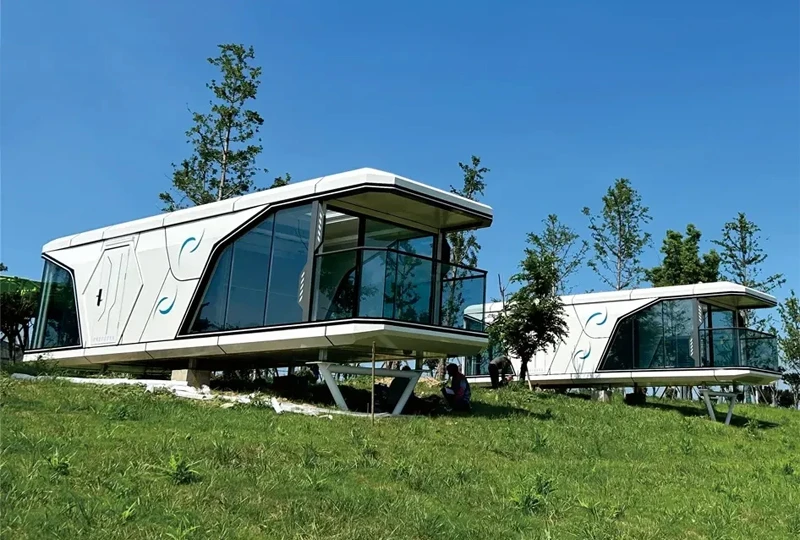
The global market for capsule houses has grown rapidly as more investors, resort developers, and private buyers look for modern, flexible, and efficient accommodation solutions.
However, one of the most common questions before starting a project is:
How much does a capsule house cost?
The answer depends on many factors, including design, size, materials, smart systems, customization level, transportation, and installation requirements.
At PodVoyager, we manufacture customized capsule houses and modular space solutions in Linyi, Shandong, China, helping global clients develop tourism, hospitality, and commercial projects.
This guide explains the major factors that determine capsule house cost and how buyers can evaluate the real value behind different price levels.
What Is the Average Capsule House Cost?
The price of a capsule house varies significantly depending on specifications and customization.
Generally, capsule house prices can range from:
- Small basic capsule units: approximately $10,000–$30,000+
- Mid-range accommodation capsules: approximately $30,000–$80,000+
- Luxury smart capsule houses: $80,000–$150,000+
However, the initial product price is only one part of the total investment.
A complete project budget may also include:
- Transportation costs
- Foundation preparation
- Installation expenses
- Utility connections
- Interior customization
- Smart systems
- Local regulations and permits
For commercial projects, understanding the complete cost structure is more important than comparing only the factory quotation.
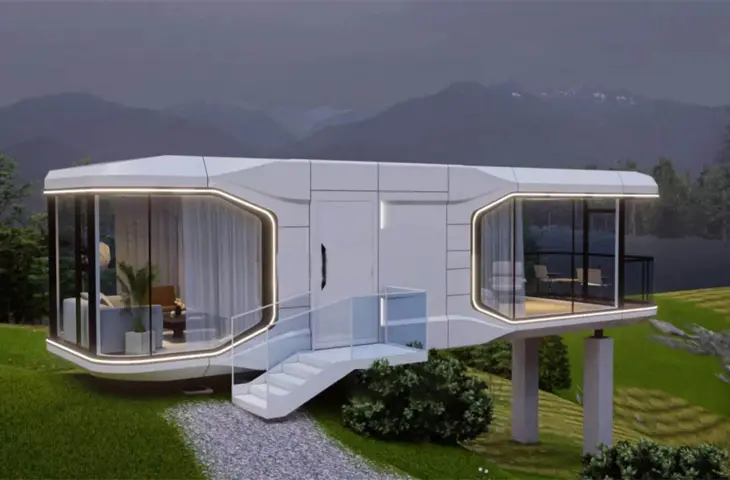
Key Factors That Affect Capsule House Price
1. Capsule House Size and Layout Design
The first factor affecting cost is the overall size.
A compact capsule house designed for short stays may include:
- Sleeping area
- Small bathroom
- Basic living space
A larger luxury capsule house may include:
- Separate bedroom areas
- Full bathroom
- Kitchen facilities
- Lounge space
- Panoramic glass walls
Larger structures require:
- More materials
- More structural engineering
- More interior finishing work
Therefore, size is one of the biggest price factors.
2. Structural Materials and Manufacturing Quality
The quality of the structural system directly affects durability and long-term value.
High-quality capsule houses typically use:
- Steel structural frames
- Aluminum alloy components
- High-performance insulation systems
- Weather-resistant exterior materials
- Double-glazed or panoramic glass systems
For projects located in challenging environments such as:
- Coastal areas
- Mountain regions
- Desert climates
- Cold regions
Material selection becomes even more important.
A lower initial price may result in higher maintenance costs later.
3. Interior Configuration and Luxury Level
The interior design level has a major impact on capsule house pricing.
Basic configurations may include:
- Bed
- Lighting system
- Basic furniture
- Standard bathroom facilities
Premium configurations may include:
- Smart home systems
- Luxury bathroom equipment
- Customized furniture
- High-end flooring
- Entertainment systems
- Automated control systems
For hospitality projects, interior quality directly influences guest experience and rental pricing.
4. Smart Technology Integration
Modern capsule houses increasingly include smart technologies.
Popular options include:
- Smart lighting control
- Automated curtains
- Smart temperature management
- Remote monitoring systems
- Intelligent door locks
These features improve:
- Guest convenience
- Energy efficiency
- Property management efficiency
However, additional technology integration will also increase the initial investment.
5. Glass Design and Architectural Features
Many capsule houses are designed around panoramic views.
Large glass areas create:
- Better connection with nature
- Premium visual experience
- Higher accommodation value
However, specialized glass systems require:
- Higher manufacturing costs
- Stronger structural design
- Better insulation solutions
This is why luxury capsule houses often have higher prices compared with basic models.
6. Transportation and Installation Costs
For international buyers, logistics can represent a significant part of the total project budget.
Factors include:
- Shipping distance
- Container requirements
- Port fees
- Local transportation
- Crane installation requirements
A professional manufacturer should consider transportation efficiency during the design stage.
At PodVoyager, modular structures are designed with international transportation requirements in mind to help optimize project costs.
7. Customization Requirements
One major advantage of capsule houses is customization.
Clients may request:
- Custom exterior appearance
- Specific room layouts
- Different materials
- Branding elements
- Special climate adaptations
However, customized designs require additional:
- Engineering work
- Production planning
- Testing procedures
The more unique the project requirements, the more the final price may change.
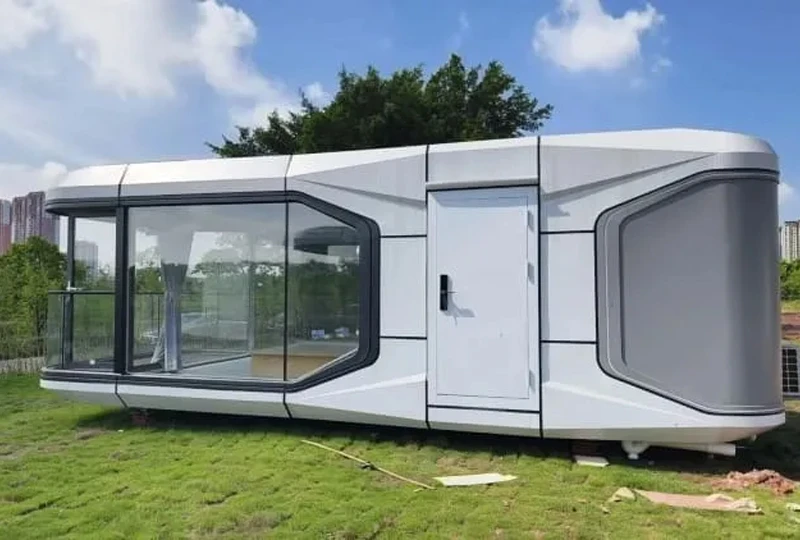
Capsule House Cost vs Traditional Construction
Many investors compare capsule houses with traditional buildings.
Traditional construction usually involves:
- Long construction periods
- More labor requirements
- Greater uncertainty
- Higher on-site management costs
Capsule houses offer:
- Faster deployment
- Factory-controlled production
- Lower construction complexity
- Flexible expansion options
For tourism and hospitality projects, speed-to-market can be just as important as construction cost.
Opening earlier means generating revenue earlier.
How Investors Should Evaluate Capsule House Value
The cheapest capsule house is not always the most profitable option.
A better evaluation should consider:
Initial Investment
Including:
- Product cost
- Shipping
- Installation
Operating Performance
Including:
- Energy efficiency
- Maintenance requirements
- Guest satisfaction
Revenue Potential
Including:
- Rental pricing
- Occupancy rate
- Market positioning
A premium capsule house with better design and durability may create higher returns over time.
Why Choose PodVoyager for Capsule House Projects
As a professional capsule house manufacturer based in Linyi, Shandong, China, PodVoyager provides customized modular accommodation solutions for global clients.
Our capabilities include:
- Custom capsule house design
- Factory manufacturing
- Smart system integration
- International export support
- Project consultation
- Modular expansion solutions
Whether you are developing a glamping resort, eco-tourism project, or private accommodation space, we help transform ideas into practical modular solutions.
Final Thoughts
The cost of a capsule house depends on much more than the basic unit price.
Size, materials, design, technology, customization, transportation, and installation all influence the final investment.
For buyers planning a serious project, choosing an experienced manufacturer is the key to balancing:
- Quality
- Cost
- Durability
- Commercial value
A well-designed capsule house is not simply a building—it is a long-term investment in flexible and profitable space solutions.
Explore more at https://podvoyager.com/ and discuss your custom capsule house project with PodVoyager.
