
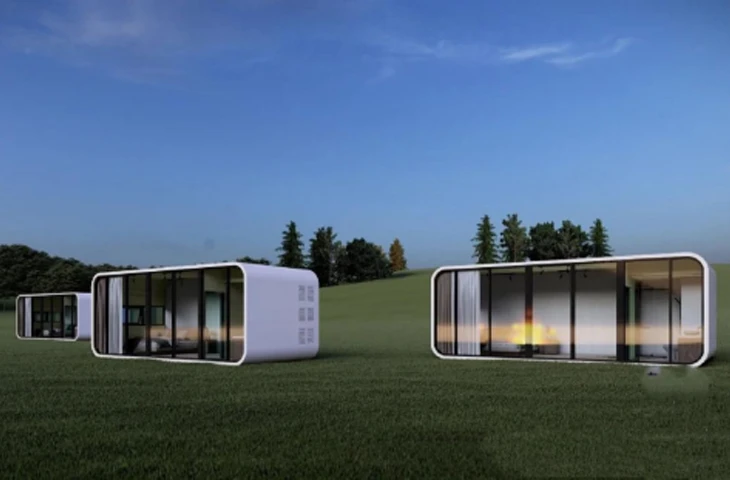
As we move through 2026, the global housing landscape continues to transform. Rising construction costs, urban density challenges, and a growing desire for flexible, sustainable living solutions have propelled capsule houses from a niche curiosity to a mainstream housing option. For buyers researching “Chinese capsule house price 2026,” the question is no longer simply “How much does one cost?” but rather “What am I getting for my money, and how do I ensure I make a wise investment?”
The answer is more nuanced than a single number. Chinese capsule houses vary dramatically in quality, features, and long-term value. A low-priced unit from an unknown manufacturer might seem appealing initially, but hidden costs—poor insulation, substandard materials, unreliable shipping, and lack of customer support—often erase any upfront savings within months.
At PodVoyager, we manufacture our capsule homes in our own factory in Linyi, Shandong, China. We have been building and shipping high-quality prefabricated homes to clients around the world for years. This guide draws on our real-world experience to give you an honest, detailed understanding of what influences capsule house prices in 2026, what trends are shaping the market, and how to work with a manufacturer you can trust.
The State of the Capsule House Market in 2026
The capsule house industry has matured significantly in recent years. What was once a novelty has become a legitimate sector of the global housing market, with established manufacturers, standardized quality protocols, and growing acceptance among builders, architects, and homeowners.
Supply Chain Normalization
Following the disruptions of previous years, global supply chains have largely stabilized. Raw material prices—steel, aluminum, lumber, insulation, and electronics—have found new equilibrium points. This stability benefits buyers, as manufacturers can offer more predictable pricing and shorter lead times.
However, regional variations persist. Energy costs, labor availability, and transportation expenses differ across markets, meaning that a Chinese capsule house price in 2026 reflects not just the cost of manufacturing but also the cost of getting that home to your specific location.
Growing Demand for Compact Living
The pandemic-era shift toward remote work has become permanent for many professionals. People no longer need to live in expensive urban centers to access good jobs. Instead, they are seeking affordable, comfortable homes in desirable locations—and capsule houses fit this need perfectly.
This increased demand has attracted more manufacturers to the market, both in China and elsewhere. Competition has driven innovation and, in some segments, moderated price increases. But it has also created confusion, as buyers must distinguish between reputable manufacturers and opportunistic newcomers.
Sustainability as a Standard Expectation

In 2026, energy efficiency is no longer a luxury feature—it is a baseline expectation. Buyers understand that a poorly insulated capsule house will cost them thousands in heating and cooling over its lifetime. Manufacturers who cannot demonstrate genuine energy performance have been pushed to the margins of the market.
At PodVoyager, we have always prioritized thermal performance. Our 2026 models feature enhanced insulation packages, upgraded glazing options, and improved air sealing details that exceed typical building code requirements.
Breaking Down Chinese Capsule House Price 2026 Components
To understand what you will pay for a capsule house in 2026, you need to understand the components that drive cost. Each represents a decision point where quality and price intersect.
Size and Configuration
The most fundamental cost driver is size. Capsule houses typically range from approximately 100 square feet to over 500 square feet, with prices scaling roughly with square footage. However, the relationship is not perfectly linear—smaller units have higher costs per square foot because certain components (bathroom fixtures, electrical panels, HVAC systems) have minimum costs regardless of unit size.
Single-unit capsules are the most common configuration. They consist of one integrated living space and are ideal for individuals, couples, or specific applications like home offices or guest houses.
Multi-section configurations involve connecting two or more units. This approach offers flexibility—you might start with one unit and add another later—but requires additional connection hardware and potentially more complex installation. The per-square-foot cost of multi-section configurations is often slightly lower than single units, as certain fixed costs are spread across more space.
Two-story configurations stack units vertically. This maximizes living space on a small footprint but requires reinforced structural elements and internal circulation (stairs or ladders). Two-story units typically command a premium over single-story configurations of equivalent square footage.
At PodVoyager, we help you determine the optimal size and configuration for your needs. We never push you toward a larger unit than you actually require, and we offer creative solutions that maximize usable space without unnecessary expense.
Structural Systems
The structural system of your capsule house determines its durability, safety, and longevity. In 2026, two primary approaches dominate the market.
Steel-framed construction remains the gold standard for durability. Steel does not rot, warp, or provide food for pests. It can span greater distances than wood, creating more open interior layouts. Modern steel frames incorporate thermal break technology to prevent heat loss through the structure.
The cost of steel fluctuates with global commodity markets, but prices have stabilized at levels significantly lower than the peaks of recent years. For buyers in areas with extreme weather, seismic activity, or pest pressures, steel framing is often worth the premium.
Timber-framed construction offers a lighter, often less expensive alternative. Modern engineered wood products—LVL, glulam, and CLT—provide strength and stability that rivals steel in many applications. Timber also offers natural insulation properties and a warm aesthetic.
Timber prices have moderated from their historic highs, making wood-framed capsules more accessible in 2026 than they were a few years ago. For buyers in mild climates or those prioritizing natural materials, timber framing is an excellent choice.
PodVoyager offers both structural systems, and we are transparent about the cost and performance implications of each. We do not push one over the other; we help you choose based on your specific conditions and priorities.
Building Envelope and Insulation
The building envelope—walls, roof, floor, windows, and doors—determines your capsule house’s energy performance. In 2026, buyers are increasingly sophisticated about insulation, recognizing that upfront investment in thermal performance pays dividends for decades.
Closed-cell spray foam delivers the highest insulation value per inch. It also air-seals the building envelope and adds structural rigidity. It is the most expensive option but is often justified in extreme climates or for buyers who prioritize energy efficiency above all else.
Rigid foam boards (polyiso, XPS, EPS) offer excellent performance at a moderate price. They are easier to install than spray foam and provide consistent R-values. For most climates, a well-executed rigid foam envelope provides excellent performance without the premium of spray foam.
Mineral wool and fiberglass batts represent more traditional approaches. Mineral wool offers superior fire resistance and soundproofing. Fiberglass is the most budget-friendly option but requires meticulous installation to achieve rated performance.
Windows and glazing deserve special attention. In 2026, triple-pane windows with low-E coatings and argon fills have become standard in premium capsules. Double-pane units remain common in mid-range products. Single-pane windows are increasingly rare and generally inadvisable.
At PodVoyager, we offer tiered insulation and glazing packages. We also provide energy modeling services to help you understand the payback period for upgraded insulation in your specific climate.
Interior Finishes and Systems
The interior of your capsule house is where you will live, and the quality of finishes dramatically affects both your daily experience and the long-term durability of the space.
Flooring options span a wide price range. Luxury vinyl plank (LVP) offers waterproof durability at a moderate cost. Engineered hardwood provides a premium feel at a higher price. Polished concrete or sealed industrial finishes offer a unique aesthetic at a moderate cost but can feel cold in some applications.
Kitchen and bathroom fixtures represent a significant portion of interior costs. Standard packages include functional, durable fixtures from reputable brands. Upgrade options include premium fixtures, smart appliances, and luxury finishes.
Lighting and electrical systems have evolved significantly. Smart home integration—programmable lighting, automated shades, voice-controlled systems—has become more affordable and is increasingly common even in mid-range capsules.
HVAC systems have also improved. Mini-split heat pumps have become the standard for capsule houses, offering efficient heating and cooling in a compact package. Premium options include ERV/HRV units for enhanced ventilation and air quality.
PodVoyager’s standard interior packages provide excellent quality at reasonable prices. Our upgrade options allow you to customize your space exactly as you wish.
Smart Home and Technology Integration
In 2026, technology is no longer an add-on—it is integrated into the fabric of well-designed capsule houses. The cost of smart home features has decreased while capability has increased.
Basic smart features might include programmable thermostats, smart lighting controls, and remote monitoring of energy use. These add modest cost and provide genuine convenience.
Advanced smart features include integrated security systems, automated window coverings, voice-controlled environments, and predictive energy management. These add more cost but can significantly enhance the living experience.
Off-grid capabilities represent a different category of technology investment. Solar panels, battery storage, water filtration, and waste management systems allow a capsule house to operate independently of utility infrastructure. These systems add substantial upfront cost but can eliminate ongoing utility expenses and provide energy independence.
PodVoyager offers technology packages at multiple price points, and we are happy to integrate custom solutions for clients with specific requirements.
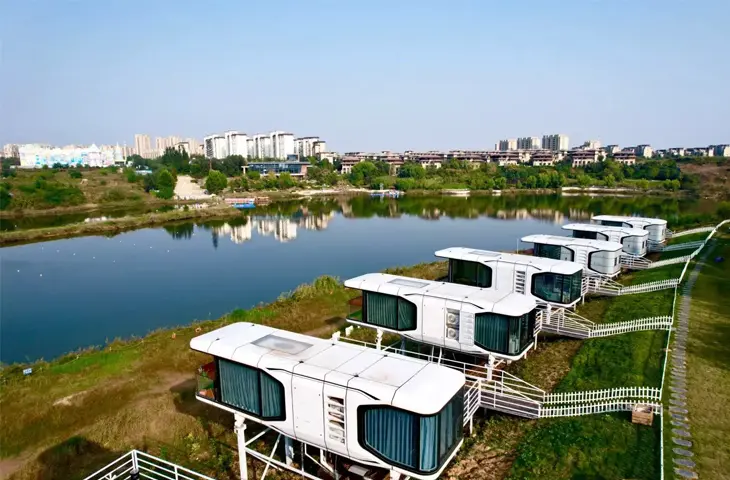
Market Trends Affecting Chinese Capsule House Price 2026
Several broader trends are shaping the capsule house market in 2026. Understanding these trends helps you make informed timing and purchasing decisions.
Material Cost Stabilization
After years of volatility, raw material prices have largely stabilized. Steel, aluminum, copper, and lumber are trading within predictable ranges. This stability benefits buyers, as manufacturers can offer more consistent pricing without the volatility premiums that were common in previous years.
However, energy costs remain a wild card. The energy intensity of manufacturing—particularly steel production and cement manufacturing—means that fluctuations in electricity and fuel prices still affect final product costs.
Labor Cost Increases
Skilled manufacturing labor costs in China have risen steadily over the past decade. This reflects the country’s economic development and the increasing value placed on craftsmanship. While Chinese labor remains highly competitive globally, the days of ultra-low-cost manufacturing are behind us.
For buyers, this means that the lowest-priced capsule houses—those relying on minimal labor input and rapid assembly—may cut corners in ways that affect quality. Reputable manufacturers like PodVoyager invest in skilled workers and fair wages, and those costs are reflected in our pricing.
Transportation and Logistics Costs
Shipping costs have moderated from their pandemic peaks but remain elevated compared to pre-2020 levels. Ocean freight rates, container availability, and overland transport costs all affect the final delivered price of a capsule house.
The distance from our Linyi factory to your location, the size and weight of your unit, and the complexity of the delivery route all influence shipping costs. We provide transparent shipping quotes and work with experienced logistics partners to ensure reliable, cost-effective delivery.
Regulatory Evolution
Building codes and zoning regulations continue to evolve in response to the growing popularity of tiny homes and prefabricated housing. Some jurisdictions have become more accommodating, streamlining permitting processes for factory-built homes. Others remain restrictive, requiring expensive variances or site-specific engineering.
When you work with PodVoyager, we help you navigate these regulatory landscapes. Our engineering team can provide the documentation needed for permitting in most jurisdictions, and we can advise on modifications that help your project meet local requirements.
Comparing Options in the 2026 Market
Not all capsule houses are created equal. Understanding the landscape helps you evaluate options and recognize value.
Budget-Tier Products
At the lowest price points, you will find capsule houses built to minimal specifications. These units typically use thinner steel, minimal insulation, single-pane windows, and basic finishes. They may be adequate for temporary applications or very mild climates, but they often require significant maintenance and have short lifespans.
The challenge with budget-tier products is that the savings upfront are often erased by higher energy bills, repair costs, and early replacement. Additionally, budget manufacturers typically offer limited customer support and may not honor warranties when issues arise.
Mid-Tier Manufacturers
Most reputable capsule house manufacturers occupy the mid-tier, offering good quality at reasonable prices. These companies use appropriate materials, maintain decent quality control, and provide basic customer support.
However, the variance within this category is significant. Some mid-tier manufacturers have excellent engineering and craftsmanship. Others cut corners in ways that are not immediately visible—using lower-grade components, simplifying quality checks, or reducing insulation thickness.
Evaluating the specific manufacturer—not just the price—is essential. Look for transparency about materials and methods, documented quality control processes, and references from past clients.
Premium Providers
At the high end, you will find manufacturers offering luxury finishes, advanced technology integration, extensive customization, and white-glove service. These capsule houses are genuine premium products, often indistinguishable from conventionally built luxury homes.
The question for most buyers is whether the premium features justify the additional cost. For some—those building a primary residence or a high-end rental property—the answer is yes. For others—those seeking a functional backyard office or a simple vacation retreat—a well-executed mid-tier solution provides better value.
PodVoyager’s Position
PodVoyager occupies the value sweet spot in the 2026 market. We offer the quality, customization, and customer support of a premium manufacturer at prices that reflect our efficient factory production and direct sales model.
We do not compete on being the absolute cheapest—there will always be someone willing to cut more corners. Instead, we compete on value: the best possible outcome for your investment. Our clients consistently tell us that our combination of quality, communication, and reliability is unmatched at our price point.
The PodVoyager Advantage: Manufacturing in Linyi, Shandong
When evaluating Chinese capsule house price 2026, the reputation and capabilities of the manufacturer matter enormously. PodVoyager operates from a modern facility in Linyi, Shandong—a region with deep industrial expertise and a skilled workforce.
Direct Factory Pricing
Because we own our factory and employ our craftspeople directly, we eliminate the markups that come with brokers, distributors, and middlemen. When you work with PodVoyager, you are dealing directly with the people who build your home.
This direct relationship means better communication, greater accountability, and more competitive pricing. You are not paying for a sales network or a marketing budget—you are paying for materials, labor, and expertise.
Rigorous Quality Control
Our Linyi facility operates under strict quality management protocols. Every incoming material is inspected. Every stage of production is documented. Every finished unit undergoes comprehensive testing before shipping.
Our quality control team has the authority to halt production if standards are not met. We maintain detailed records for every unit we build, creating an audit trail from raw material to finished product.
This commitment to quality means that when you receive your PodVoyager capsule house, you are getting exactly what you paid for—not a product that looked good in photos but reveals flaws upon arrival.
Customization Without Chaos
One of the challenges of factory-built housing is balancing customization with efficiency. PodVoyager has solved this through modular design principles and flexible production systems.
Our standard models provide a proven foundation that keeps costs reasonable. But we also offer extensive customization options, from layout modifications to material selections to specialized features. Because we control the entire production process, we can accommodate your unique requirements without the chaos and cost overruns that plague custom builders.
Hidden Costs to Anticipate
A truly honest discussion of Chinese capsule house price 2026 must address the costs beyond the purchase price of the unit itself. Being prepared for these expenses prevents unpleasant surprises and helps you budget accurately.
Shipping and Logistics
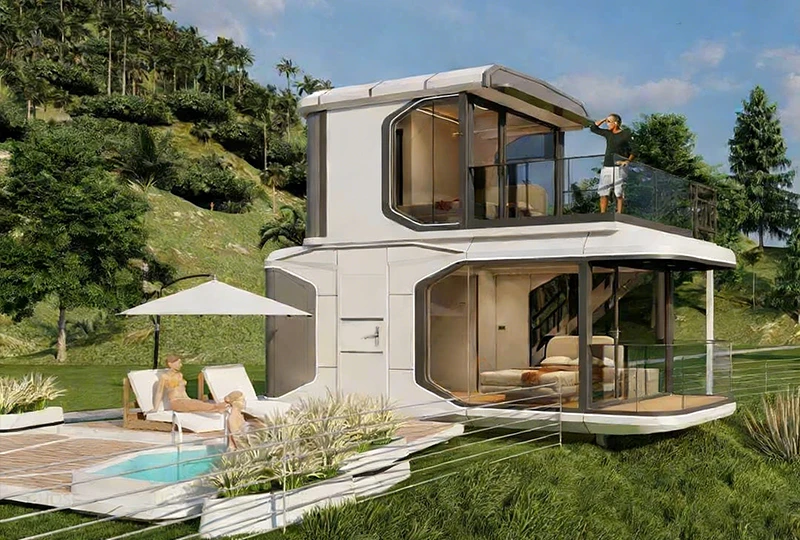
Capsule houses are large and heavy. Moving one from our Linyi factory to your site requires careful planning and carries real costs. The final shipping expense depends on:
- The size and weight of your specific unit
- The distance to your destination
- Current ocean freight rates
- Port fees and handling charges
- Overland transport from port to your site
At PodVoyager, we provide transparent shipping quotes based on your specific location and requirements. We also offer guidance on port selection, customs documentation, and coordination with local freight forwarders.
Site Preparation
Your capsule house needs a place to sit, and that place likely requires preparation. Site work might include:
- Clearing and grading the land
- Installing a foundation (concrete slab, pier system, helical piles, or other options)
- Running utility connections (water, power, sewer, internet)
- Obtaining necessary permits
- Addressing drainage or environmental concerns
These costs vary enormously based on your location and the condition of your site. A flat, already-developed lot in a suburban area might require minimal preparation. A remote, sloping site with no existing utilities will demand significant investment.
Installation and Assembly
While capsule houses are designed for straightforward installation, you will likely need local contractors to handle the final connection. This typically involves:
- Positioning the unit on its foundation
- Connecting to utilities
- Assembling any on-site components (decks, stairs, awnings)
- Performing final inspections and obtaining certificates of occupancy
PodVoyager provides detailed installation documentation and can recommend qualified contractors in your area. For particularly complex projects, we can arrange for our team to oversee installation.
Import Duties and Taxes
If you are importing a capsule house into your country, you will likely owe customs duties and value-added or sales taxes. These rates vary by country and product classification. Some jurisdictions offer reduced rates for energy-efficient housing or prefabricated structures.
PodVoyager provides documentation to help you understand these costs and can advise on classification strategies where appropriate. We cannot provide tax advice, but we can ensure you have the information needed to work with your local customs broker.
Working with PodVoyager: Your Path to a Capsule Home
Understanding Chinese capsule house price 2026 is one thing; actually bringing your capsule home to life is another. Here is how our process works.
Initial Consultation
We start by learning about your needs, preferences, and budget. What will you use the capsule for? How many people will occupy it? What climate will it face? What aesthetic appeals to you? Do you have specific timeline requirements?
This conversation is free and carries no obligation. We believe in earning your business through expertise and transparency, not pressure tactics.
Design and Specification
Based on our initial consultation, we develop a design that meets your requirements. We provide detailed specifications for every component, from the structural frame to the light switches to the finish colors.
This is also the stage where we discuss budget in detail. We help you understand the cost implications of different choices and suggest trade-offs that preserve the features most important to you.
Quotation and Agreement
Once the design is finalized, we provide a comprehensive quotation that breaks down every cost component. You will know exactly what you are paying for and why.
Our agreement includes clear terms for payment, production timelines, shipping, and warranty coverage. We want you to feel confident and secure in your decision.
Production and Quality Control
With the agreement in place, your capsule house enters production. You will receive regular updates and photos from our Linyi facility, so you can watch your home take shape.
Our quality control team inspects every stage of production, and we conduct comprehensive final testing before the unit is approved for shipping.
Shipping and Delivery
We coordinate all logistics to get your capsule house from our factory to your site. We provide tracking information and regular updates throughout the journey.
Installation and Handover
Once your capsule arrives, we guide you through the installation process. Depending on your location and the complexity of the project, we may provide on-site supervision or recommend qualified local contractors.
After installation is complete, we conduct a final walk-through with you, answering any questions and ensuring you are completely satisfied.
Why Choose PodVoyager in 2026
The capsule house market in 2026 offers more choices than ever before. Here is why PodVoyager should be your partner.
Proven Track Record
We have been building and shipping capsule houses for years. Our clients span multiple continents and climates. We have learned from every project, continuously improving our designs, materials, and processes.
Transparent Communication
We tell you what you need to know, not just what you want to hear. If there are challenges or trade-offs, we discuss them openly. Our clients appreciate this honesty and tell us it builds trust.
Genuine Customization
We do not force you into rigid templates. If you need something specific—a particular layout, a unique material, a specialized feature—we find a way to make it work.
Responsive Support
Even after your capsule house is installed, we remain available. Questions about maintenance? Issues with a component? Need documentation for insurance or resale? We are here to help.
Taking the Next Step
You have now learned about the factors influencing Chinese capsule house price 2026, the trends shaping the market, the hidden costs to anticipate, and the value that PodVoyager brings to every project. The next step is to start a conversation.
Whether you are dreaming of a backyard office, a vacation retreat, a rental property, or a primary residence, we would love to hear about your vision. Our team is ready to answer your questions, provide guidance, and help you understand what a PodVoyager capsule house would cost for your specific situation.
Experience the PodVoyager quality difference. Learn more about our manufacturing standards and how we ensure every home meets our exacting specifications.
