
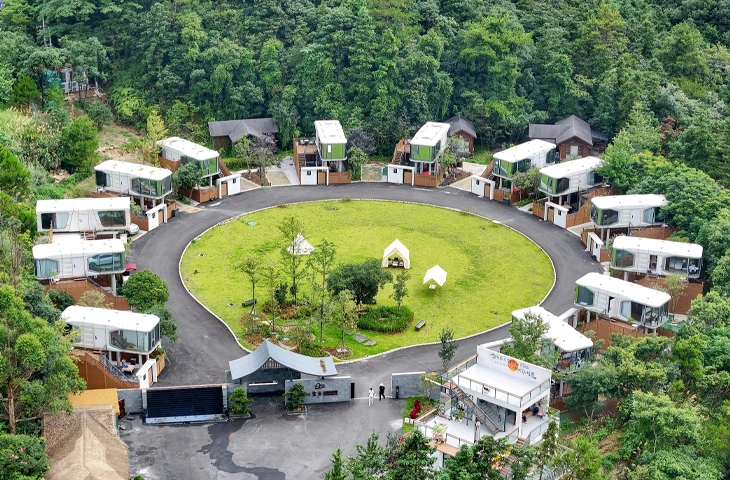
In the modern world, sustainability is no longer a trend — it’s a necessity. As we look toward the future, eco-friendly housing has become essential for reducing our carbon footprint and creating a more sustainable lifestyle. At PodVoyager, we believe that the future of living lies in space capsule houses, and we are committed to ensuring that these homes are not only innovative and functional, but also environmentally responsible.
A space capsule house is more than just a compact, futuristic home; it’s a symbol of sustainable living. From the materials used to construct it to the technology that powers it, every aspect of a space capsule house is designed with the planet in mind.
In this article, we’ll walk you through the eco-friendly materials that go into making a space capsule house, explain why these materials are so important, and highlight how PodVoyager integrates sustainability into every home we build.
1. Recycled Steel and Aluminum: The Backbone of Durability
One of the primary materials used in the construction of space capsule houses is steel. Steel is strong, durable, and has an incredibly low environmental impact when sourced responsibly. Recycled steel is a cornerstone of sustainable construction, and it’s a material we use extensively in PodVoyager homes.
Why Steel and Aluminum?
- Strength: Steel is highly durable and provides the structural strength required for modern homes. It’s able to withstand extreme weather conditions, ensuring that your home remains safe and secure for years.
- Recyclability: Steel is 100% recyclable. This means that recycled steel can be reused without losing its quality, helping reduce the need for new raw materials.
- Lightweight and Efficient: Aluminum, another material we use in the exterior construction, is lightweight, highly resistant to corrosion, and can be easily recycled, contributing to a more sustainable building process.
By using recycled steel and aluminum, we minimize the need for new metal production, which is energy-intensive, and help reduce carbon emissions in the construction process.
2. Bamboo and Wood Veneer: Renewable and Biodegradable
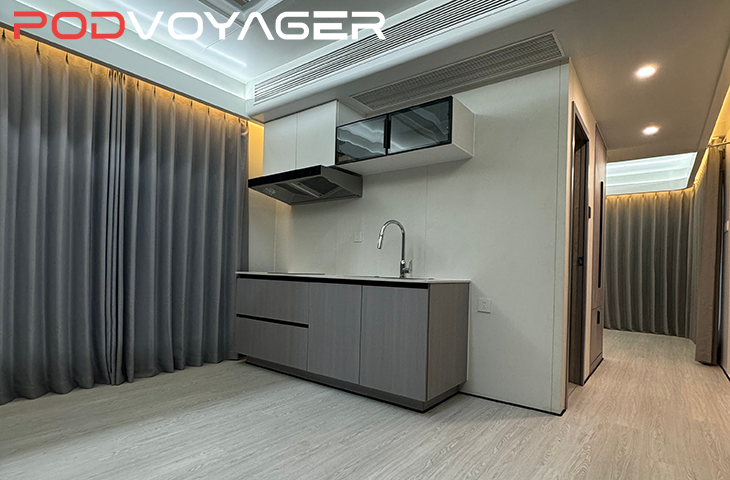
For interior finishes, we turn to bamboo and wood veneer — two of the most sustainable materials available today. Bamboo is a fast-growing plant that regenerates quickly and doesn’t require replanting after harvesting, making it a highly renewable resource.
Why Bamboo and Wood Veneer?
- Renewable Resource: Bamboo is one of the fastest-growing plants on Earth, and it can be harvested in just a few years, making it a far more sustainable option than traditional wood.
- Durability: Bamboo is incredibly strong and resilient, making it ideal for flooring, wall panels, and furniture.
- Aesthetic Appeal: Bamboo offers a beautiful, natural aesthetic that can enhance the look and feel of your space capsule home, giving it a modern yet earthy charm.
- Low Environmental Impact: Bamboo requires far fewer resources to grow than traditional hardwoods, and it can be cultivated with little to no pesticides or fertilizers.
Wood Veneer:
We also use wood veneer — thin layers of real wood — as a finishing material in our homes. Wood veneer is an eco-friendly option because it uses less wood than solid lumber and results in less waste. Plus, it retains all the beauty and warmth of natural wood, contributing to a comfortable, sustainable living environment.
3. Natural Insulation Materials: Keeping Your Home Energy-Efficient
Insulation is critical for energy efficiency, and choosing the right materials can make a huge difference in the overall sustainability of your home. In our space capsule houses, we use a variety of natural, sustainable insulation materials to ensure that your home stays comfortable year-round while minimizing energy usage.
Why Natural Insulation?
- Cotton Insulation: Made from recycled cotton, this insulation is highly effective at keeping homes warm in the winter and cool in the summer. Cotton insulation is safe to handle and doesn’t emit harmful chemicals into the air.
- Hemp Insulation: Hemp is another excellent option for natural insulation. It’s renewable, biodegradable, and highly effective at regulating temperature. Hemp insulation also has natural anti-microbial properties, improving indoor air quality.
- Sheep Wool Insulation: Wool is naturally breathable, moisture-regulating, and flame-retardant. It absorbs and retains heat effectively, keeping your space capsule home comfortable with minimal reliance on artificial heating and cooling systems.
These natural insulation materials are not only eco-friendly but also enhance the energy efficiency of your home, reducing your carbon footprint and lowering utility bills over time.
4. Non-Toxic Paints and Finishes: Improving Indoor Air Quality
In a small home like a space capsule, air quality is a crucial factor in ensuring comfort. Many traditional paints and finishes contain harmful chemicals known as volatile organic compounds (VOCs), which can negatively impact air quality and overall health.
At PodVoyager, we use low-VOC paints and natural finishes that are non-toxic, ensuring that the air inside your space capsule home is safe to breathe and free from harmful chemicals.
Why Low-VOC Paints?
- Healthier Environment: Low-VOC paints contain fewer harmful chemicals, which means they’re safer for your health and the health of the planet.
- Better Air Quality: These paints and finishes don’t emit toxic fumes, so the air quality in your home stays clean and fresh.
- Eco-Friendly: Low-VOC paints are less harmful to the environment, as they release fewer toxins into the atmosphere.
5. Solar Power and Renewable Energy: Harnessing the Sun for Sustainable Living
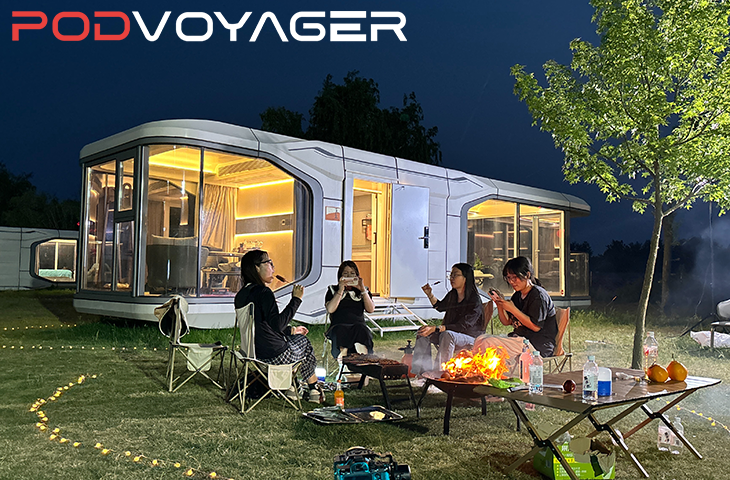
One of the most exciting aspects of space capsule houses is their ability to integrate solar power systems. By incorporating solar panels into the design of the home, we reduce reliance on traditional power sources and help you live off the grid if desired.
Why Solar Power?
- Energy Independence: Solar power systems allow you to generate your own electricity, reducing reliance on external utilities and ensuring that your home is more self-sufficient.
- Eco-Friendly: Solar energy is a clean, renewable source of power that reduces your carbon footprint and helps combat climate change.
- Cost Savings: By installing solar panels, you can significantly reduce your electricity bills, making the space capsule house not only a sustainable choice but also a cost-effective one in the long term.
6. Sustainable Construction Practices: Minimizing Waste and Maximizing Efficiency
Building a space capsule house is not only about using eco-friendly materials, but also about applying sustainable construction methods that minimize waste and increase efficiency. At PodVoyager, we utilize modular construction methods that allow for precision fabrication and waste reduction.
Why Modular Construction?
- Reduced Waste: By building components off-site in a controlled factory environment, we minimize waste and ensure that materials are used efficiently.
- Quick and Efficient Construction: Modular homes are faster to build than traditional homes, reducing the environmental impact of the construction process.
- Customization: Modular design also allows for customized layouts that cater to your specific needs without compromising on sustainability.
Why Choose PodVoyager for Your Eco-Friendly Space Capsule Home?
At PodVoyager, we are committed to creating homes that are both sustainable and innovative. We use only the best eco-friendly materials and construction practices to build homes that will stand the test of time, both in terms of durability and environmental impact.
When you choose a PodVoyager space capsule house, you’re not just investing in a home — you’re investing in a sustainable future. From recycled steel to solar power, our homes are designed with your comfort and the planet in mind.
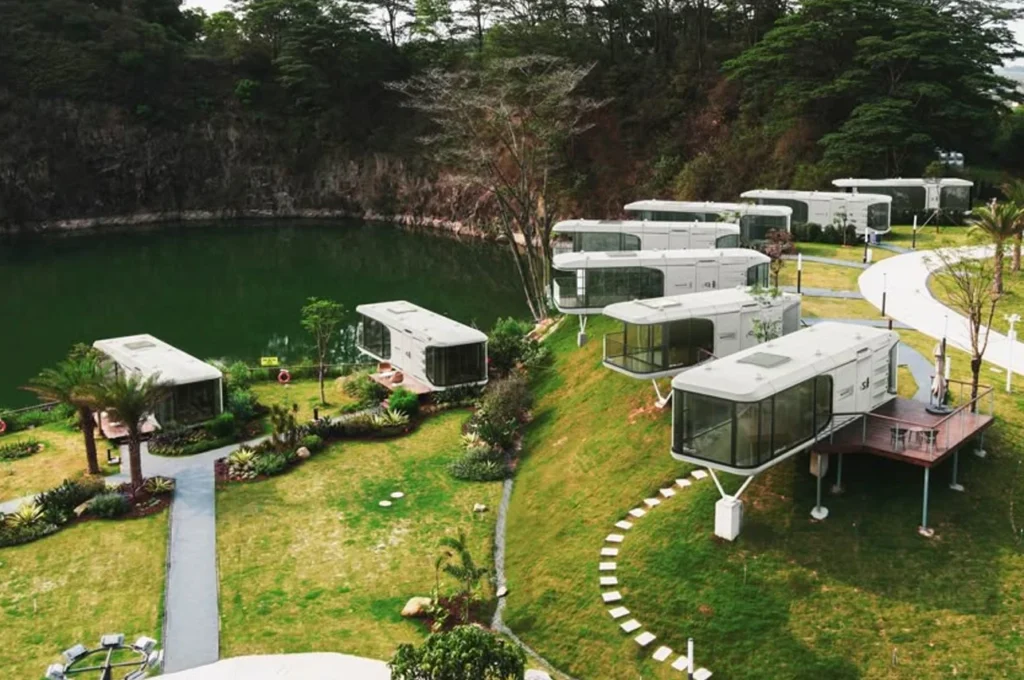
FAQ: Eco-Friendly Materials in Space Capsule Houses
Q1: What materials are used to make space capsule houses?
We use recycled steel, aluminum, bamboo, wood veneer, natural insulation (cotton, hemp, wool), and low-VOC paints to ensure that each home is both durable and eco-friendly.
Q2: How do space capsule homes reduce their environmental impact?
By using sustainable materials, energy-efficient systems (solar power, smart thermostats), and minimizing waste through modular construction, our space capsule homes reduce their carbon footprint and environmental impact.
Q3: Can I customize the eco-friendly features of my space capsule home?
Absolutely! At PodVoyager, we work with you to integrate solar panels, rainwater harvesting, and other sustainable features into your design.
Q4: Are space capsule homes really energy-efficient?
Yes! With high-performance insulation, solar energy systems, and energy-efficient appliances, space capsule homes are designed to keep your energy consumption low while maintaining comfort.
Ready to start designing your sustainable home?
At PodVoyager, we offer the perfect blend of innovation and sustainability. Contact us today to learn more about our eco-friendly space capsule houses and how we can help you create the perfect home for the future.
