
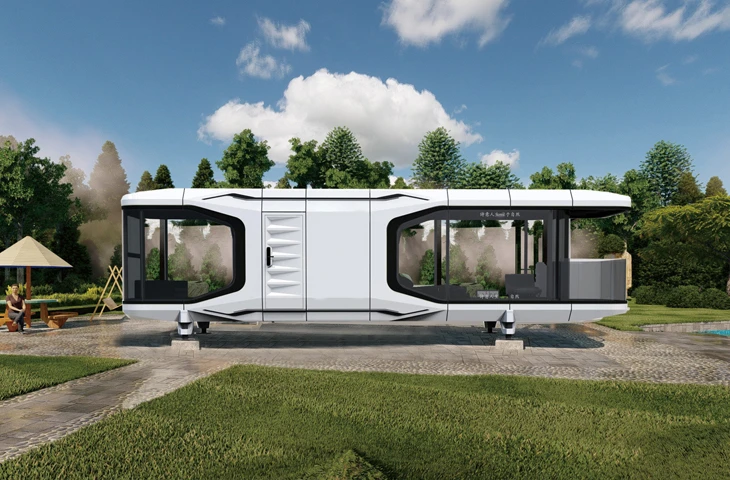
Temporary accommodation is no longer limited to traditional cabins, prefabricated dormitories, or basic site buildings. For resort developers, tourism operators, construction companies, and commercial project owners, temporary accommodation pods offer another way to create functional, self-contained living spaces without relying entirely on conventional construction.
These modular units can be planned for different project requirements, from short-term accommodation at remote sites to guest rooms for seasonal tourism operations. Their layouts, interior facilities, and external appearance can also be selected according to the intended use.
For buyers exploring overseas manufacturing options, China is an important sourcing destination to consider. A China pod hotel manufacturer may provide modular accommodation units that can be configured for hospitality and other commercial applications. However, choosing the right supplier involves more than comparing product photos or factory prices. Buyers need to evaluate the unit specifications, project conditions, transportation requirements, and local installation arrangements together.
What Are Temporary Accommodation Pods?
Temporary accommodation pods are prefabricated or modular units designed to provide usable indoor accommodation for a defined period or project purpose. Unlike conventional buildings constructed entirely on-site, these units are manufactured or assembled in a controlled production environment and then transported to the destination for installation or placement.
Depending on their design, temporary accommodation pods may include:
- A sleeping area with built-in furniture
- A private bathroom and shower
- Electrical outlets and lighting
- Heating, ventilation, and air conditioning provisions
- Insulation suitable for the intended climate
- Windows and doors designed for the required level of comfort and security
Not every pod includes all these features as standard. The actual configuration depends on the model, manufacturer, and buyer’s specifications.
Термин temporary also does not automatically mean that a unit is lightweight, easily relocatable, or exempt from building regulations. A modular accommodation unit may still require foundations, lifting equipment, utility connections, permits, and local inspections. These factors should be confirmed before purchasing.
Where Can Temporary Accommodation Pods Be Used?
The right accommodation pod depends on the project environment, expected occupancy, length of use, and operating model. Several applications are particularly relevant to commercial buyers.
1. Construction Sites and Remote Work Locations
Construction projects, infrastructure developments, and remote industrial sites may require accommodation for workers or project personnel. In locations where permanent buildings are impractical or construction schedules are tight, modular accommodation can provide an alternative to building conventional facilities from the ground up.
For these projects, buyers should prioritize practical considerations such as:
- Number of occupants per unit
- Sleeping arrangements and available floor space
- Bathroom and shower requirements
- Heating, cooling, and ventilation
- Durability under the expected operating conditions
- Access to water, electricity, and wastewater systems
A unit designed for resort guests may not be the most economical or practical choice for a workforce accommodation project. The intended use should guide the specification from the beginning.
2. Resorts and Glamping Developments
Tourism projects often need accommodation that combines a comfortable indoor environment with a distinctive outdoor experience. Temporary accommodation pods can help developers add guest rooms in stages, expand seasonal capacity, or create accommodation clusters in locations where traditional construction may be more complicated.
For resort applications, appearance and guest experience become important alongside basic functionality. Buyers may consider panoramic windows, private bathrooms, integrated furniture, outdoor decks, and layouts that make the most of the surrounding landscape.
PodVoyager’s capsule accommodation products are developed with hospitality applications in mind. For example, the Glamp V8 provides one product reference for developers evaluating modular guest accommodation.
The most suitable configuration will depend on the site’s layout, target guest profile, climate, and the level of service the resort intends to provide.
3. Temporary Accommodation for Events and Tourism Projects
Seasonal events, temporary visitor facilities, and tourism developments may need additional accommodation during peak periods. Modular units can offer a way to plan accommodation capacity around project demand.
Before selecting a product, operators should consider how long the units will be used, whether they need to be moved after the event, how utilities will be connected, and how housekeeping and maintenance will be managed.
A unit that works well as a permanent guest room within a resort may require a different site arrangement when used for a short-term event. The operating plan should therefore be part of the purchasing decision.
4. Temporary Offices and Mixed-Use Project Spaces
Not every modular pod needs to function as a bedroom. Some projects require temporary reception areas, staff offices, management rooms, or visitor facilities alongside accommodation.
This is where modular planning becomes useful. Rather than purchasing unrelated structures for every function, project owners can evaluate whether different unit types can be coordinated within one overall site plan.
For developers planning a combination of accommodation and commercial spaces, the important question is not simply which pod looks best, but how each unit supports the project’s daily operations.
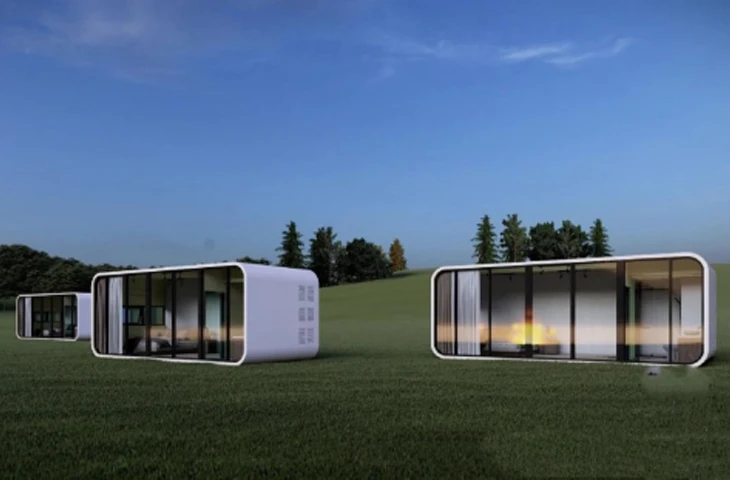
Why Consider a China Pod Hotel Manufacturer?
China has an established manufacturing base for prefabricated and modular building products. For overseas buyers, sourcing from a China pod hotel manufacturer can provide access to different product designs, configuration options, and manufacturing arrangements.
However, the phrase China pod hotel can refer to different things. Some buyers use it to search for operating pod hotels in China, while others are looking for Chinese manufacturers that produce capsule-style hotel rooms or modular accommodation units.
If your goal is to purchase products for an overseas project, focus on manufacturers rather than hotel operators.
A manufacturer should be able to help you understand the product’s dimensions, structural configuration, interior layout, materials, utility provisions, and customization possibilities. These details are essential when assessing whether a unit can be transported to and used at your destination.
Product Configuration and Customization
A temporary accommodation project rarely has exactly the same requirements as another. A resort may need private bathrooms and large windows, while a construction project may prioritize practical sleeping capacity and easy maintenance.
When communicating with a manufacturer, clarify:
- External dimensions and internal usable space
- Number of beds and intended occupancy
- Bathroom and plumbing configuration
- Insulation and climate-control provisions
- Electrical system and connection requirements
- Interior finishes and furniture
- Exterior materials and appearance
- Any project-specific layout or equipment requirements
Ask the manufacturer to distinguish standard specifications from optional upgrades. This makes quotations easier to compare and reduces the risk of misunderstanding what is included in the purchase price.
Manufacturing and Quality Inspection
Product photos alone are not enough to evaluate a supplier. Buyers should request clear technical specifications and, where possible, review production photos, material details, and inspection procedures.
It is also useful to understand how the manufacturer checks key components before shipment. For example, buyers may ask how doors and windows are inspected, how interior equipment is tested, and what documentation is provided for the finished unit.
PodVoyager introduces its production workflow in За кулисами процесса производства капсульных домов PodVoyager. Reviewing the manufacturing process can help buyers prepare more specific questions when evaluating a supplier.
What Should Buyers Check Before Ordering Temporary Accommodation Pods?
Selecting a suitable product is only one part of a successful project. International buyers should evaluate the entire process from initial planning to installation and operation.
1. Confirm the Project Requirements
Start with the site and the intended use. A manufacturer cannot recommend an appropriate configuration based only on a general request for accommodation pods.
Prepare the following information:
| Project detail | Information to provide |
|---|---|
| Место реализации проекта | Country, region, and site conditions |
| Intended use | Resort, workforce accommodation, tourism, or other application |
| Required quantity | Number of units in the initial order and possible future expansion |
| Заполняемость | Expected number of guests or users per unit |
| Space requirements | Available site area and preferred unit dimensions |
| Facilities | Bathroom, kitchen, furniture, HVAC, and other requirements |
| Климат | Expected temperatures, humidity, wind, and other environmental conditions |
| Project schedule | Target production, shipping, and installation timeline |
The more complete the project information, the easier it is to evaluate whether a proposed product is suitable.
2. Evaluate Climate and Site Conditions
A unit intended for a mild climate may not perform in the same way in a region with extreme heat, cold temperatures, high humidity, or strong winds.
Buyers should ask for details about insulation, window specifications, ventilation, waterproofing, structural design, and applicable environmental performance data.
Site conditions matter as well. Ground preparation, drainage, access roads, foundation design, and available lifting space can all affect installation.
Do not assume that a product is suitable for every climate or site simply because it is described as prefabricated or modular. Request specifications relevant to the actual project location.
3. Understand Transportation and Installation
A factory quotation is not necessarily the total project cost. International buyers need to consider packaging, inland transportation in China, export procedures, ocean freight, destination port charges, customs clearance, import duties and taxes, local transportation, lifting, and installation.
The unit’s dimensions and shipping configuration can affect transportation arrangements. Some products may require special handling or lifting equipment, depending on their size and weight.
Before placing an order, ask the supplier to clarify:
- What packaging is included
- What product dimensions and weights apply to shipping
- Which export documents are available
- What is included in the quoted delivery terms
- Which installation tasks are the buyer’s responsibility
- Whether local contractors or specialist equipment will be required
Also confirm local planning, zoning, building, fire-safety, electrical, plumbing, and accessibility requirements with the relevant authorities or qualified professionals. Requirements vary by country and jurisdiction, and importing a prefabricated unit does not automatically make it exempt from local regulations.
4. Compare Suppliers Based on the Full Specification
When comparing manufacturers, avoid choosing solely by the lowest quoted price. Two products may look similar while having different structural materials, insulation systems, interior equipment, window specifications, or included services.
A useful comparison should cover the complete specification, including what is included, what is optional, and what is excluded.
Buyers should also request a clear quotation with product details, payment terms, production schedule, packaging information, and the responsibilities of each party. Any important customization requirements should be documented before production begins.
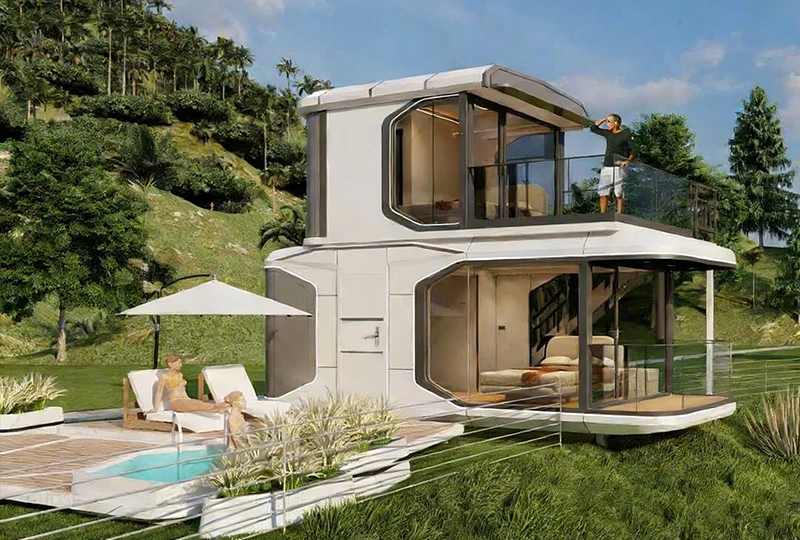
How PodVoyager Supports Modular Accommodation Projects
PodVoyager focuses on capsule houses and modular accommodation solutions for hospitality and commercial projects. Rather than treating every inquiry as a request for a standard product, the project discussion can begin with the buyer’s available site, space requirements, intended use, and operating conditions.
This approach is useful when a project needs more than a single accommodation unit. For example, a resort developer may need to plan guest rooms with different layouts, combine multiple units, or coordinate accommodation with reception and service spaces.
Этот Glamp V8 is one example of a capsule accommodation product for hospitality applications. Buyers can review the product details and discuss whether its configuration is relevant to their project.
For a more complete assessment, share the following information with PodVoyager:
- Your project location and intended application
- The number of units you are considering
- Your preferred room layout and facilities
- Available site dimensions and access conditions
- Your target purchasing and project timeline
Visit the Сайт PodVoyager to explore its modular accommodation products, or contact the team to discuss your project requirements.
Часто задаваемые вопросы
Are temporary accommodation pods suitable for long-term use?
They can be considered for projects with different operating periods, but suitability depends on the product’s structural design, materials, insulation, equipment, maintenance requirements, and local regulations. Buyers should evaluate the actual specifications rather than relying on the word temporary.
Can temporary accommodation pods include private bathrooms?
Yes, some accommodation pod configurations can include private bathrooms and shower facilities. However, plumbing layouts, water supply, wastewater connections, and bathroom equipment vary by model. Confirm these details with the manufacturer before ordering.
Can I buy a pod hotel directly from China?
Yes. Overseas buyers can contact Chinese manufacturers directly to discuss product specifications, customization, quotations, and export arrangements. Before purchasing, verify the supplier’s manufacturing information, product documentation, shipping arrangements, and the responsibilities included in the quotation.
What is the difference between a temporary accommodation pod and a capsule hotel room?
The terms describe overlapping but different concepts. A temporary accommodation pod emphasizes the unit’s use as modular or prefabricated accommodation for a project. A capsule hotel room generally refers to a compact guest room used within a hospitality operation. The actual size, facilities, and construction can vary considerably.
How much do temporary accommodation pods cost?
There is no single standard price. Costs depend on the unit’s dimensions, structural materials, interior configuration, bathroom and electrical equipment, customization, order quantity, packaging, and transportation requirements. Buyers should request a quotation based on a complete project specification.
Do temporary accommodation pods need planning permission?
Requirements depend on the destination country, local jurisdiction, land use, duration of placement, building classification, and utility connections. A modular or prefabricated unit may still be subject to planning, building, fire-safety, and other local requirements. Check with the relevant local authorities before purchasing or installing the units.
Plan Your Temporary Accommodation Project with the Right Manufacturer
Temporary accommodation pods can support a range of commercial applications, from resort guest rooms to workforce accommodation and temporary tourism facilities. Their value depends on how well the product configuration matches the project’s actual requirements.
For overseas buyers considering a China pod hotel manufacturer, the most important steps are to define the intended use, compare complete product specifications, understand transportation and installation requirements, and verify local regulations before placing an order.
PodVoyager works with buyers exploring capsule houses and modular accommodation solutions for hospitality and commercial projects. Share your project location, required quantity, preferred layout, and intended application to start a more practical product discussion.
