
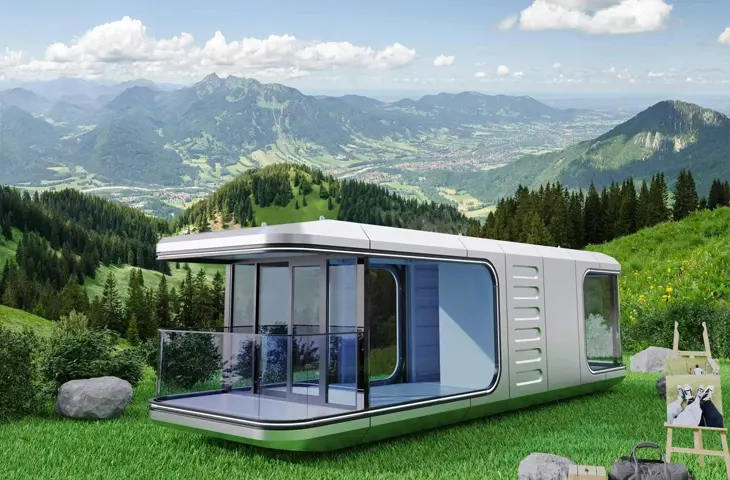
The hospitality industry is looking for more flexible ways to develop accommodation spaces. From nature resorts and glamping destinations to roadside hotels and tourism developments, investors increasingly need building solutions that can be manufactured efficiently, adapted to different sites, and expanded as demand grows.
This has created new opportunities for the China pod hotel market. Chinese manufacturers offer a range of prefabricated accommodation products, including capsule houses, modular cabins, and customized hotel units designed for commercial applications.
However, choosing a pod hotel supplier is not simply about purchasing a prefabricated room. For developers and hospitality operators, the real challenge is creating comfortable, functional accommodation that fits the project’s positioning and operational requirements.
This is where custom modular rooms become important. Instead of selecting a fixed product and adjusting the entire project around it, developers can work with a manufacturer to configure accommodation units according to guest capacity, interior facilities, site conditions, and architectural preferences.
At PodVoyager, we develop capsule houses and modular accommodation solutions for international commercial projects. Our approach focuses on turning a project’s requirements into modular spaces that can be manufactured, transported, installed, and put into use.
1. What Is a Pod Hotel and Why Are Developers Interested?
A pod hotel is an accommodation concept built around compact, self-contained or semi-independent sleeping units. Depending on the design, these units may feature private bathrooms, integrated furniture, climate-control systems, large windows, and dedicated living areas.
Traditional pod hotels often use small sleeping pods in shared indoor environments. However, the concept has expanded in the hospitality market. Modern modular pod accommodation can include independent capsule-style rooms designed for outdoor resorts, tourism destinations, and commercial accommodation projects.
For developers, this creates several possibilities.
A Different Accommodation Experience
A distinctive architectural design can help a hospitality project stand out. Capsule-style accommodation, panoramic windows, and nature-oriented layouts can create a different guest experience from conventional hotel rooms.
For a glamping resort, for example, guests may want to enjoy surrounding landscapes while maintaining the comfort of a private hotel room.
A well-designed modular accommodation unit can combine sleeping space, a private bathroom, climate control, and carefully planned interior facilities within one integrated structure.
Flexible Project Development
Not every hospitality project needs to build all accommodation units at once.
A developer may begin with a small number of rooms, evaluate market demand, and introduce additional units in later phases. Modular accommodation can support this approach when the product design, infrastructure, and site layout are planned for future expansion.
This is particularly relevant for tourism developments where land conditions, seasonal demand, and investment budgets may influence the construction schedule.
More Predictable Factory Production
Prefabricated accommodation units are manufactured before being delivered to the project site.
This allows many production activities, such as structural fabrication, interior finishing, and equipment installation, to take place in a controlled manufacturing environment.
However, factory production does not eliminate the need for site preparation, transportation planning, foundation work, or local regulatory approval. These elements must still be considered as part of the overall project.
2. Why Consider a China Pod Hotel Manufacturer?
China is an important sourcing market for prefabricated buildings and modular accommodation products. International buyers can explore different architectural designs, product configurations, and manufacturing options when evaluating Chinese suppliers.
But the right reason to choose a China pod hotel manufacturer should not be limited to the factory price.
Product Selection and Customization
A commercial accommodation project may require several types of rooms rather than one standard design.
For example, a resort may need compact units for couples, larger rooms for families, and premium accommodation with additional living space.
Working with a manufacturer that understands modular customization makes it easier to discuss different configurations within the same project.
Buyers should confirm whether customization is available for the structure, exterior finishes, window arrangement, interior layout, bathroom equipment, and electrical systems.
Manufacturing and Quality Control
When sourcing from China, buyers should understand how the product is made rather than relying only on finished-product photographs.
Important information includes structural materials, insulation specifications, waterproofing arrangements, electrical installation, plumbing systems, and finishing standards.
A reliable supplier should be able to explain the product’s construction and identify the inspection procedures used during manufacturing.
For international projects, buyers should also confirm which technical documents, test records, or compliance information are available for the specific product.
Transportation and Installation Planning
A pod hotel manufactured in China still needs to reach its final destination.
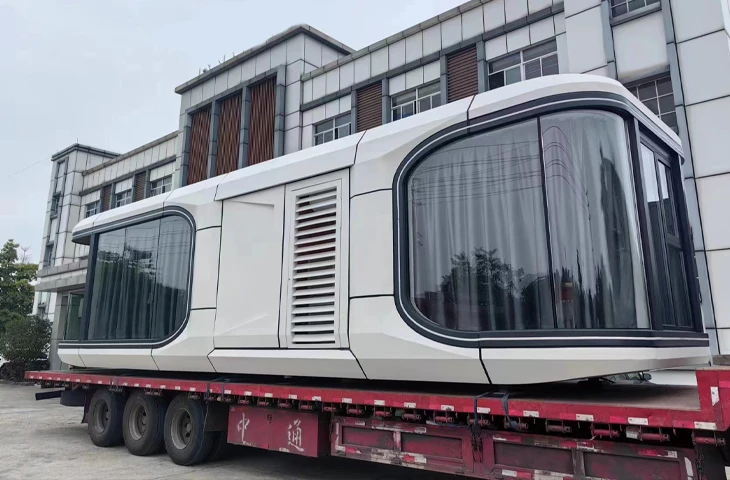
Product dimensions, gross weight, packaging, loading arrangements, shipping routes, customs requirements, and inland transportation all influence the delivery plan.
The destination site must also be prepared for unloading and installation. Road access, lifting equipment, foundation conditions, and utility connections should be reviewed before production and shipment.
For this reason, buyers should evaluate a manufacturer’s ability to discuss the complete delivery process, not just the factory production stage.
3. Custom Modular Rooms: Designing Accommodation Around the Project
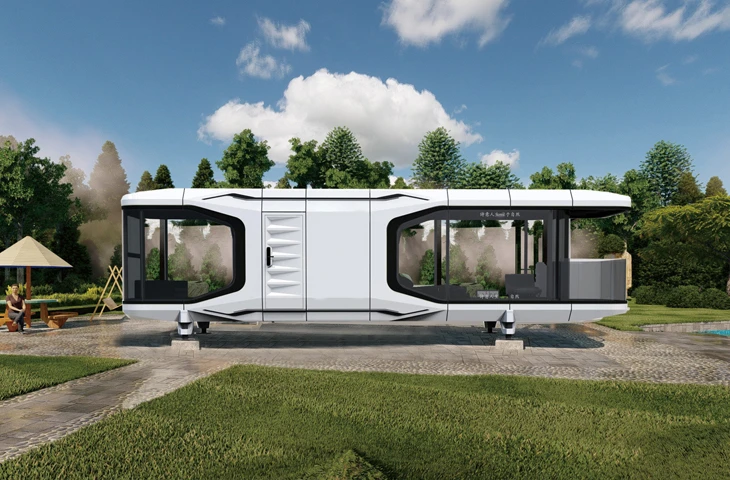
The main advantage of custom modular rooms is that the accommodation can be planned around the intended use instead of being restricted to a single standard layout.
For hospitality developers, customization should begin with the guest experience and operational requirements.
Compact Rooms for Couples and Short-Stay Guests
Smaller accommodation units can be suitable for couples, weekend travelers, and short-stay guests.
The design should prioritize a comfortable sleeping area, convenient bathroom access, storage, ventilation, and a pleasant interior atmosphere.
Large windows can also help connect the room with its surroundings, particularly in nature-based accommodation projects.
However, window placement, privacy, solar exposure, and insulation should be evaluated together rather than treated as separate design decisions.
Larger Rooms for Families and Premium Accommodation
Family-oriented and premium accommodation may require more usable space, additional sleeping arrangements, and more flexible interior functions.
Instead of simply increasing the number of beds, developers should consider how guests move through the room and whether the layout supports comfortable use.
Additional facilities may include a larger bathroom, separate seating area, additional storage, or a more spacious living environment.
These requirements can affect the unit’s dimensions, equipment configuration, and transportation arrangements, so they should be discussed before production begins.
Modular Combinations for Larger Projects
Some projects require accommodation units with more complex spatial arrangements.
Rather than treating every room as an isolated product, developers can explore combinations of modular units to create larger accommodation configurations.
For example, PodVoyager’s Glamp V8 can be used as a basis for configurations such as the Glamp «Угловая стопка» (тройная) и Двухэтажный глэмп с четырьмя модулями.
These configurations offer another way to plan accommodation capacity and spatial organization.
The suitability of a particular combination depends on structural design, transportation limitations, site conditions, and installation requirements. It should therefore be confirmed with the manufacturer for the intended project.
4. What Should Custom Modular Hotel Rooms Include?
A modular room is more than an exterior structure. Its internal systems determine whether it can function as practical accommodation.
When evaluating custom modular rooms, buyers should review the following areas.
Structural system and insulation
The structural frame, wall construction, roof, floor, and insulation should be suitable for the destination climate and intended use.
For projects in cold regions, thermal performance and condensation control deserve particular attention. In hot or humid climates, ventilation, solar protection, waterproofing, and corrosion resistance may be more important.
Bathroom and plumbing
A private bathroom can be an important feature of independent hospitality accommodation.
Buyers should confirm the bathroom layout, sanitary equipment, hot-water arrangements, drainage connections, and maintenance access.
It is also important to understand which plumbing components are installed at the factory and which connections must be completed on site.
Electrical systems and climate control
Lighting, power outlets, distribution systems, air conditioning, ventilation, and other equipment should be planned according to the intended use and local electrical requirements.
The destination country’s applicable electrical standards should be confirmed before the final specification is approved.
Interior finishes and furniture
Interior materials influence both guest experience and long-term maintenance.
Developers should consider cleaning requirements, wear resistance, moisture exposure, replacement availability, and the overall positioning of the accommodation.
A premium resort may prioritize a different interior style from a budget-oriented tourism project. Customization should reflect the target market rather than adding features that do not improve the guest experience.
5. How to Plan a Modular Pod Hotel Project
Choosing the right accommodation unit is only one part of developing a pod hotel.
A successful project needs coordination between the building design, site layout, utilities, transportation, and daily operations.
Start With the Site and Project Positioning
Before selecting a model, define the basic project conditions.
Consider the available land area, surrounding landscape, target guests, expected accommodation capacity, and intended operating season.
A mountain resort, coastal glamping site, and roadside accommodation project may all require different room configurations and technical specifications.
The site also determines how units can be arranged. Developers should consider privacy between rooms, guest circulation, service access, views, outdoor spaces, and connections to shared facilities.
Plan Shared Facilities Alongside Guest Rooms
A pod hotel needs more than sleeping units.
Depending on the project’s size and operating model, shared facilities may include reception, dining areas, laundry rooms, storage, maintenance spaces, staff facilities, and outdoor activity areas.
These spaces should be included in the initial master plan.
For example, a small glamping resort may use independent capsule rooms combined with a centralized reception and dining building. A larger hospitality development may require more extensive service and operational facilities.
The goal is to create a complete accommodation environment rather than simply arranging multiple prefabricated rooms on a site.
Consider Transportation and Installation Early
Modular rooms are manufactured before delivery, but their dimensions and weight still affect how they can be transported.
Developers should confirm the loading method, packaging dimensions, shipping route, destination port, and inland delivery requirements.
At the project site, access roads, unloading areas, foundations, lifting equipment, and utility connections must be ready.
A practical delivery schedule should coordinate manufacturing, shipping, site preparation, and installation. This helps reduce avoidable delays and additional handling costs.
6. How to Choose the Right China Pod Hotel Supplier
The manufacturer has a direct influence on product specifications, customization possibilities, manufacturing quality, and delivery coordination.
Before making a purchasing decision, international buyers should evaluate more than the supplier’s online catalogue.
Ask for actual product specifications, manufacturing photographs, construction details, and information about the production and inspection process.
You should also confirm the following:
- Which models are currently available?
- Which parts of the product can be customized?
- What materials and structural systems are used?
- What equipment is included in the standard configuration?
- What additional options are available?
- What inspection procedures are carried out before shipment?
- What are the packaged dimensions and gross weight?
- Which export documents and technical documents can be provided?
- What transportation and installation support can be discussed?
For projects involving commercial accommodation, local building regulations and fire, electrical, structural, and other applicable requirements should also be checked independently.
PodVoyager provides information about its capsule house manufacturing process, allowing buyers to understand the production stages and quality inspection considerations.
The most effective supplier evaluation is based on verifiable product and manufacturing information, not simply marketing descriptions.
7. PodVoyager: From Capsule Houses to Custom Modular Rooms
At PodVoyager, we view modular accommodation as part of a larger commercial space solution.
A resort developer may initially approach us looking for capsule houses, but the actual requirement may involve several different types of space: guest rooms, reception areas, service buildings, or other supporting facilities.
The right solution depends on what the project needs to accomplish.
Our capsule house range includes products designed for different accommodation applications. Buyers can explore the Glamp V8 and other available models as starting points for discussing their project requirements.
For larger configurations, modular combinations can also be explored according to the required capacity and site conditions.
Rather than assuming that one standard room fits every project, we encourage buyers to provide their intended application, site information, expected capacity, preferred design, and destination.
This allows the discussion to move beyond product selection toward a more practical manufacturing and delivery plan.
8. Request a Custom Modular Accommodation Solution
If you are researching a China pod hotel manufacturer or looking for custom modular rooms for a hospitality project, start by defining the spaces you need.
You do not have to finalize every architectural detail before contacting a manufacturer. However, providing some basic project information can make the initial discussion much more productive.
Useful information includes:
- Project location and site conditions
- Intended application and target guest market
- Required accommodation capacity
- Preferred room sizes and layouts
- Bathroom and equipment requirements
- Desired exterior appearance and interior style
- Estimated order quantity
- Expected delivery schedule
With these details, PodVoyager can discuss suitable capsule house models and possible modular configurations for your project.
Whether you are developing a glamping resort, a nature-based hotel, or a commercial accommodation facility, the objective is to create modular spaces that match your project requirements.
Узнать больше PodVoyager или свяжитесь с нашей командой to discuss your custom modular accommodation project.
Часто задаваемые вопросы
What is a China pod hotel?
A China pod hotel generally refers to a pod-style or capsule-style accommodation product manufactured by a Chinese supplier. These products may be used in hotels, glamping resorts, tourism developments, and other hospitality projects. The actual configuration depends on the manufacturer’s product range.
Can I order custom modular rooms from China?
Yes. Some Chinese modular building manufacturers offer customization for room layouts, exterior finishes, windows, interior materials, bathroom equipment, and electrical systems. Available options depend on the manufacturer and product model, so buyers should confirm the scope before ordering.
Are pod hotels suitable for glamping resorts?
Yes, capsule-style accommodation can be used in glamping resorts when the design is suitable for the climate, site conditions, guest requirements, and local regulations. Developers should also plan shared facilities, utilities, transportation, and long-term maintenance.
What is the difference between a pod hotel and a capsule house?
The terms are related but describe different concepts. A pod hotel refers to an accommodation model or hospitality operation built around pod-style rooms. A capsule house refers to the physical modular building itself. A capsule house can be used as an independent accommodation unit within a pod hotel or resort project.
How do I choose a reliable pod hotel manufacturer in China?
Review the manufacturer’s product specifications, materials, customization capabilities, production process, inspection procedures, and documented project experience. Also confirm packaging, shipping arrangements, technical documentation, and the scope of delivery and installation support.
Can multiple modular rooms be combined into a larger accommodation structure?
Some modular products are designed to support specific combinations. However, the feasibility depends on the structural system, connection design, transportation restrictions, and installation conditions. Buyers should request confirmation from the manufacturer for the exact configuration they intend to use.
