
Введение
Developing a resort or hospitality project involves more than choosing a building design. Investors and developers need to consider guest expectations, site conditions, construction schedules, operating costs, and the possibility of expanding the property in the future.
Prefab accommodation units offer a practical alternative to building every guest room through conventional on-site construction. Manufactured in a factory and transported to the project location, these units can reduce on-site construction work and help developers plan accommodation more systematically.
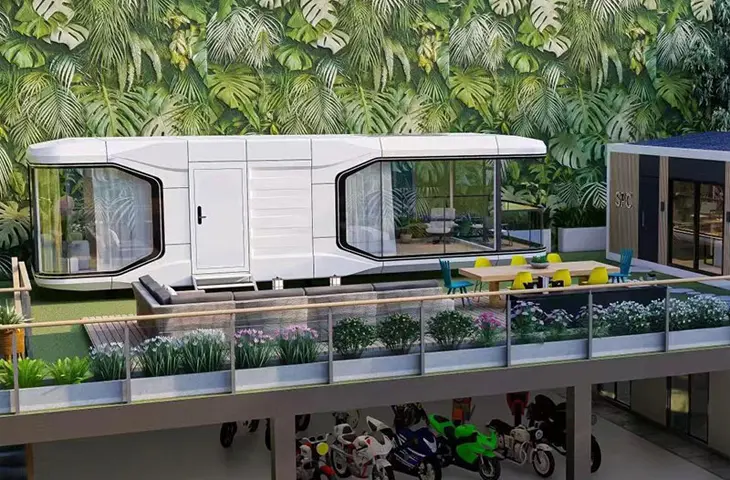
For projects such as glamping resorts, scenic-area hotels, holiday parks, and nature retreats, a capsule house can be one of the most distinctive options. Its contemporary design, panoramic windows, and integrated guest facilities can create a hotel-like experience in a natural setting.
At PodVoyager, we manufacture capsule houses and customized modular spaces in Linyi, Shandong, China. We help international buyers evaluate accommodation configurations according to their site, intended use, and project requirements, rather than treating every purchase as a standalone product order.
What Are Prefab Accommodation Units?
Prefab accommodation units are buildings or modular structures manufactured largely in a factory before being delivered to their final location. Depending on the design, they may arrive as fully fitted units or require additional assembly and finishing on site.
A unit can include a bedroom, bathroom, living area, electrical systems, plumbing, insulation, windows, furniture, and climate-control equipment. The exact configuration depends on the product and the manufacturer’s scope of supply.
For commercial projects, the main advantage is the ability to plan accommodation as a coordinated system. Instead of designing every guest room from scratch, developers can select suitable configurations, repeat specifications across multiple units, and organize procurement around a defined project plan.
Prefab accommodation does not refer to a single building style. Options may include capsule houses, modular cabins, prefabricated guest rooms, and other factory-built accommodation structures.
The right choice depends on the target guests, the local environment, available land, transportation requirements, and the experience the operator wants to create.
How to Choose Prefab Accommodation Units for Your Resort
The first decision should be based on the guest experience and business model, not simply the exterior appearance of a building.
Capsule Houses for Glamping and Nature Resorts
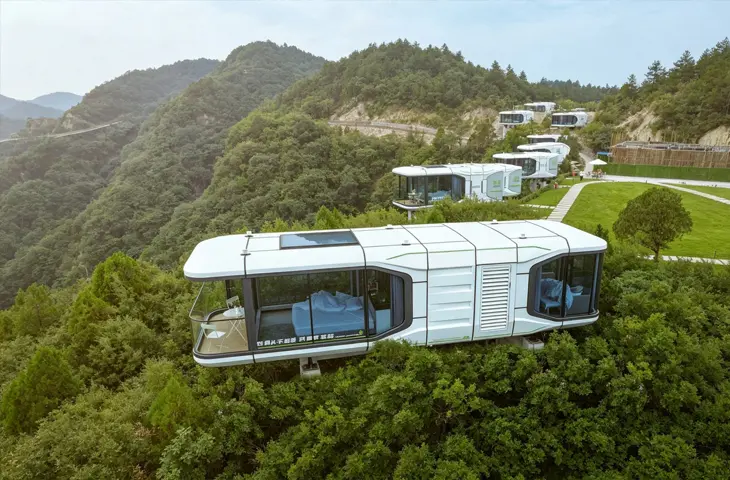
For resorts built around scenery, privacy, and distinctive accommodation, a capsule house can combine contemporary architecture with the comfort expected from a modern hotel room.
Large windows can frame mountain, forest, lake, or coastal views. A private bathroom, comfortable sleeping area, and climate-control system can make the accommodation suitable for guests who want to experience nature without giving up essential indoor comforts.
Compared with traditional camping facilities, a well-equipped capsule house can provide a more self-contained guest experience. This makes it worth considering for boutique glamping resorts, scenic destinations, and hospitality projects targeting couples or travelers seeking a distinctive stay.
However, the design should reflect the actual destination. A capsule intended for year-round operation in a cold region may require different insulation, glazing, and heating specifications from one used in a mild climate.
PodVoyager’s Glamp V8 is one option for developers evaluating self-contained capsule accommodation. For projects where private outdoor space is an important part of the guest experience, the Glamp V8B adds a balcony.
These configurations illustrate why product selection should begin with the intended use. A balcony may be particularly valuable at a scenic resort, while another project may prioritize interior layout, sleeping capacity, or climate performance.
Larger Units for Families and Extended Stays
Not every resort targets couples or short weekend visits. Family destinations and properties encouraging longer stays may need more indoor space, separate sleeping areas, kitchen facilities, or additional storage.
In these cases, buyers should evaluate the usable interior layout rather than relying only on the external dimensions of the unit.
Consider how guests will move between sleeping, bathing, dining, and living areas. Check whether furniture can be arranged comfortably, whether storage is sufficient for the expected length of stay, and whether the bathroom and kitchen facilities match the intended accommodation standard.
A larger prefab accommodation unit may require a higher initial investment, but it could support a different room category or appeal to a broader guest segment. Whether the additional cost is justified depends on local demand, achievable room rates, and the operating model.
Modular Accommodation Units for Larger Developments
For projects requiring a combination of accommodation types, modular accommodation units can provide a more flexible planning approach.
A developer might use one configuration for standard guest rooms, a larger model for families, and premium units in locations with the best views. Depending on the product’s structural system, some modular designs may also support connected or multi-level arrangements.
These possibilities need to be evaluated against transportation dimensions, structural requirements, foundation design, access, and local building regulations. Not every unit can be combined freely, and multi-module projects may require additional engineering and installation work.
The objective is to create a coordinated accommodation portfolio that supports different guest needs without making manufacturing, installation, and maintenance unnecessarily complicated.
How to Plan Accommodation Capacity Around Your Site
One of the most common planning mistakes is deciding how many units to purchase before understanding the land and infrastructure available.
The actual capacity of a site depends on more than its total area. Developers need to account for access roads, pedestrian paths, drainage, setbacks, parking, landscaping, utility connections, fire access, and shared facilities.
A site that appears large enough for 20 accommodation units may accommodate fewer once these requirements are considered. Conversely, a carefully designed layout may make better use of the available land without compromising privacy or circulation.
Start by dividing the site into four functional areas.
Accommodation areas include the guest units, private outdoor spaces, decks where applicable, and the distances between neighboring rooms. These determine how much privacy guests enjoy and how the property looks and feels.
Shared facilities include reception, dining, recreation, and other services required by the business model. Their location affects guest convenience and staff efficiency.
Operational areas cover staff access, storage, maintenance, waste management, and utility equipment. These areas may not be visible to guests, but they are essential to the daily operation of the property.
Access and infrastructure include vehicle routes, pedestrian paths, electrical supply, water, wastewater systems, and drainage.
The relationship between these areas affects both development costs and the guest experience.
For example, placing every capsule house close to reception may simplify staff operations, but it could reduce privacy. Spreading units across a scenic site may create a more secluded atmosphere while increasing the cost of roads, utility connections, and maintenance.
For this reason, developers should establish a preliminary site layout before finalizing unit quantities and specifications.
What Determines the Cost of Prefab Accommodation Units?
The cost of prefab accommodation units varies according to product dimensions, configuration, materials, equipment, order quantity, and delivery arrangements. There is no single price that applies to every project.
The factory quotation may cover the main structure, exterior finishes, windows, insulation, interior fittings, bathroom equipment, electrical systems, and optional features. Buyers need to confirm which items are included rather than assuming that every quotation represents a fully equipped accommodation unit.
For international projects, the total budget should cover several additional categories.
Factory Price and Configuration
The selected layout and level of finish are major cost factors. A basic configuration and a premium capsule house with upgraded glazing, interior finishes, furniture, and climate-control equipment may have substantially different prices.
When comparing suppliers, request a detailed specification and an itemized quotation. This makes it easier to identify whether a price difference comes from the structure itself, included equipment, or optional upgrades.
Транспортировка и монтаж
International buyers should clarify the delivery terms, transportation dimensions, packaging arrangements, freight costs, unloading requirements, and installation responsibilities.
A factory-finished unit may reduce the amount of interior work required on site, but it still needs to be transported safely and positioned correctly. Remote destinations, narrow roads, difficult terrain, and limited crane access can add considerable expense.
Confirming these conditions before production helps reduce avoidable changes and logistical surprises.
Site Preparation and Utilities
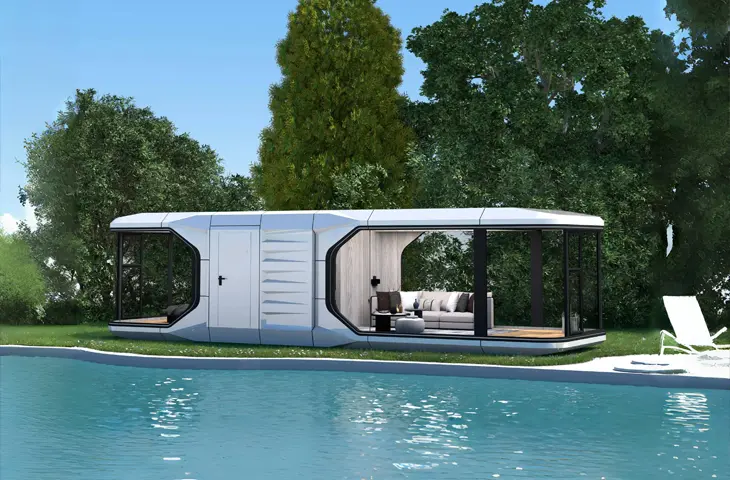
Foundations or support systems, ground preparation, drainage, electrical connections, water supply, wastewater treatment, and access roads can represent a significant part of the overall investment.
For multi-unit developments, shared infrastructure should be evaluated at the project level. A reception building or wastewater system may serve several accommodation units, while a remote unit may require longer utility connections.
A reliable project budget should therefore distinguish the cost of each accommodation unit from the infrastructure and facilities required to operate the entire property.
Long-Term Operating Costs
Initial purchase price is only one part of the financial decision. Insulation, glazing, ventilation, heating, and cooling can affect energy consumption and guest comfort. Interior materials, bathroom equipment, and exterior finishes influence cleaning, repairs, and replacement costs.
For a resort operating throughout the year, durability and thermal performance may be more important than small savings on the initial purchase. A seasonal property in a mild climate may have different priorities.
The most useful comparison considers both the initial investment and the expected operating requirements of the finished accommodation.
Why Factory Manufacturing Can Help With Project Scheduling
For hospitality investors, the development schedule affects when the property can begin operating and generating revenue.
Prefab accommodation units allow much of the manufacturing work to take place before delivery. Depending on the product and project, this can reduce the amount of construction and finishing required at the destination.
Factory manufacturing can also make it easier to coordinate repeatable specifications across multiple units. This is useful when a resort needs consistent room layouts, a coordinated exterior appearance, and a more organized procurement process.
However, prefabrication does not eliminate every potential delay. Site preparation, transportation, customs procedures, local approvals, utility connections, and installation can still affect the completion date.
Developers should coordinate factory production with site readiness. Foundations, access routes, lifting equipment, and utility arrangements should be prepared according to the manufacturer’s technical requirements before the units arrive.
For projects targeting a particular tourism season, confirm the production schedule, shipping assumptions, and installation responsibilities early. A realistic project timeline should account for the entire delivery process, not only the factory production period.
How to Make a Prefab Accommodation Project Easier to Expand
Not every resort needs to open at its final planned capacity.
For some investors, a phased development strategy provides a way to test demand before committing to a larger project. The first phase might include a limited number of accommodation units and essential shared facilities. Additional units can be considered after the operator has collected booking data and guest feedback.
This approach works best when future expansion is considered from the beginning.
Reserve suitable land for additional units, plan utility infrastructure with future capacity in mind, and establish specifications that can be reproduced in later phases. If the next phase uses different dimensions, equipment, or building configurations, additional design and infrastructure work may be required.
The operator should also consider how expansion will affect the guest experience. Adding rooms can increase revenue potential, but it may also create more traffic, reduce privacy, or increase the workload for housekeeping and maintenance.
The objective is to expand accommodation capacity without undermining the qualities that attracted guests in the first place.
What Should B2B Buyers Ask a Manufacturer Before Ordering?
A product catalogue is a useful starting point, but a commercial accommodation project requires more detailed information.
Before confirming an order, buyers should establish the exact unit configuration, technical specifications, manufacturing scope, delivery responsibilities, and installation requirements.
Request dimensioned drawings and a clear specification covering the structure, insulation, glazing, interior finishes, electrical systems, plumbing, and climate-control equipment. If the destination has extreme temperatures, high humidity, strong winds, or coastal exposure, explain these conditions before the design is finalized.
Transportation also deserves early attention. Confirm the dimensions and weight of each unit, packaging arrangements, loading requirements, and whether the intended site can accommodate delivery vehicles and lifting equipment.
For overseas projects, verify applicable planning, building, fire-safety, sanitation, and occupancy requirements with the relevant authorities or qualified local professionals. A prefabricated unit is not automatically approved for every site or application.
Finally, clarify warranty coverage, spare parts, after-sales support, and which tasks must be completed by local contractors. These details can affect long-term operating costs as much as the initial quotation.
From Prefab Accommodation Units to a Complete Resort Solution
Accommodation is only one part of a functioning resort.
Depending on the project, the developer may also need a reception building, staff office, dining area, visitor facility, or other supporting spaces. These buildings do not necessarily need to share the same configuration as the guest units.
PodVoyager’s modular approach allows buyers to consider accommodation and supporting facilities as parts of a broader project. Guest units can be selected according to comfort and room requirements, while other modular spaces can support reception, administration, and daily operations.
This is particularly relevant for developers who want a coordinated project rather than a collection of unrelated products.
You can explore PodVoyager’s modular accommodation solutions, review our project case studies, или свяжитесь с нашей командой to discuss your site’s area, intended use, unit quantity, and delivery requirements.
Заключение
Prefab accommodation units provide resort developers with another way to plan and deliver guest accommodation. Their value lies not simply in factory production, but in the ability to coordinate unit design, site layout, installation, and future expansion as parts of one project.
For glamping resorts and nature-based hospitality developments, a capsule house can be one suitable option within a broader range of prefabricated accommodation solutions. The best choice depends on the guest experience, local conditions, available infrastructure, budget, and operating model.
By defining these requirements before selecting a product, buyers can compare quotations more accurately and avoid costly changes during implementation.
For hospitality investors planning a new glamping destination, boutique resort, or scenic-area accommodation project, PodVoyager can help evaluate modular accommodation options around the practical requirements of the site and business.
