
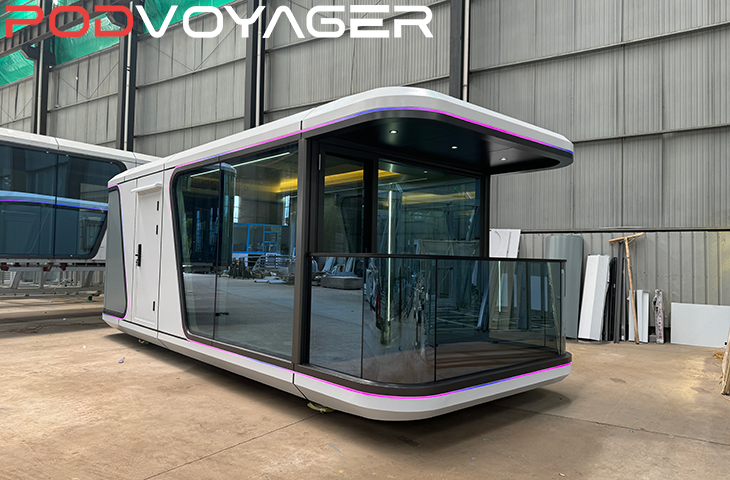
Buying a capsule house is very different from buying a regular consumer product. You’re not just purchasing a “unit”—you’re buying a complete building system that must be manufactured correctly, shipped safely, installed smoothly, and operated reliably for years.
If you ask the right questions before placing an order, you’ll avoid the most common problems global buyers face: hidden costs, mismatched specifications, weak insulation, poor waterproofing, missing documents, delays, and confusing after-sales support.
Below are the top 5 questions every buyer should ask a capsule house supplier—especially if you’re planning to use the unit for glamping resorts, eco-lodges, tourism projects, rental cabins, staff housing, or remote offices.
1) “Can you provide a complete specification sheet (not just photos)?”
A capsule house can look great in pictures but be built with very different materials inside. You should request a detailed specification sheet that clearly lists structure, insulation, windows, electrical system, bathroom system, and included appliances.
Ask for details such as:
- Overall size (length × width × height) and internal usable area
- Total weight (important for crane planning and foundation design)
- Frame material (steel structure? aluminum? thickness? anti-corrosion treatment?)
- Wall/roof/floor insulation type and thickness (PU, rock wool, EPS, etc.)
- Window type (double or triple glazing, tempered glass, thickness, low-e coating)
- Bathroom system (waterproofing layers, shower base, drainage slope, exhaust fan)
- Electrical system (wire brand/spec, breaker box, voltage options: 220V/110V)
- HVAC (AC + heating method, power, optional floor heating)
- Standard configuration list (what is included vs optional)
2) “What is included in the price—and what is NOT included?”
This is the fastest way to prevent budget surprises.
Capsule house quotes often use different pricing logic:
- Some quotes are EXW/FOB factory price (unit only)
- Others include interior furniture and appliances
- Some include installation guidance
- Some exclude critical items like electrical appliances, plumbing parts, or smart systems
Ask your supplier to break the quote into:
- Unit base price (structure + exterior)
- Interior package (flooring, wall panels, ceiling, lighting)
- Bathroom package (toilet, shower, vanity, water heater)
- Kitchen package (if any)
- Furniture package (bed, sofa, cabinets)
- Electrical system (wires, breakers, sockets, smart control)
- HVAC
- Optional upgrades (solar, floor heating, balcony, upgraded glass, etc.)
- Packing method (export packing standard, waterproof film, protective frames)
- Installation support (manual, video, remote support, on-site engineer if available)
Also ask the supplier to confirm:
- Does the price include loading and export packing?
- Does it include spare parts (recommended)?
- Does it include technical drawings and foundation guide?
3) “How is it built for climate: insulation, waterproofing, and condensation control?”
Global buyers often operate in climates with strong differences—heat, humidity, coastal corrosion, heavy snow, large day/night temperature swings. A capsule house must be designed like a real building envelope.
Ask:
- What insulation material is used in walls / roof / floor?
- What is the thickness and how is it installed (continuous insulation or with thermal bridges)?
- How do you handle waterproofing in:
- roof joints
- window edges
- bathroom floor and wall corners
- chassis / base sealing
- Do you have solutions for condensation?
- ventilation design
- bathroom exhaust
- optional fresh-air system
- thermal break windows (if available)
Why this matters:
- Many “cheap” units fail not because the design is ugly, but because they leak, sweat, smell, or mold after a season.
- If you plan glamping, guest experience depends on quiet HVAC, stable temperature, and dry interiors.
4) “How will it be shipped and installed—step by step?”
A capsule house can be factory-built perfectly, but still fail during shipping or installation. You must confirm the complete workflow.
Ask:
- Is it shipped fully assembled or partially assembled?
- What container type is required (commonly 40HQ, sometimes flat rack depending on size)?
- What are the packing protections? (corner protection, waterproof wrapping, internal bracing)
- Do you provide:
- lifting points and crane plan
- installation manual
- wiring/plumbing diagrams
- foundation plan
- remote video guidance
- Typical installation time and labor requirements:
- crane needed?
- how many workers?
- what tools?
- What site preparation is required?
- foundation type (concrete pad, piers, steel base)
- water inlet/outlet
- power supply requirement
- drainage slope
Pro tip for buyers:
Ask your supplier for a real installation video that shows the full process (lifting → placement → connection → testing). That’s a strong signal the supplier is experienced.
5) “What after-sales support and warranty do you provide?”
A capsule house is a long-term asset. Even premium units may need small replacements: door seals, control panels, lights, faucet cartridges, hinges, smart modules.
Ask:
- Warranty period for:
- structure/frame
- electrical system
- plumbing/bathroom
- appliances
- How do you handle warranty claims?
- what evidence is needed (photos/video)
- response time
- replacement shipping method
- Do you provide:
- spare parts kit (recommended for overseas buyers)
- remote troubleshooting support
- technical documents library
- Can you supply parts long-term (same model components after 2–3 years)?
This is especially important for global buyers because:
- Shipping one small part internationally can take time
- A “no support” supplier becomes very expensive later, even if the upfront price is low
Bonus: 3 Quick Questions That Save You Time (Optional Section)
If you want extra SEO content and stronger buyer trust, add this short section:
A) “Can you show real project references?”
Ask for real photos/videos from installed projects—not only factory demo units.
B) “What is your production lead time and payment terms?”
Typical topics: deposit %, balance timing, production timeline, inspection before shipment.
C) “Can you customize for my market?”
Voltage (110/220), plug type, bathroom standards, insulation upgrades, branding, layout changes.
Conclusion
Ordering a capsule house is easiest when you treat it like a professional procurement project. If your supplier can answer the five questions above with clear documents, real examples, and transparent pricing, you’ll dramatically reduce risk—and increase your chance of a smooth delivery and successful business outcome.
