
Introduction to Modern Compact Living
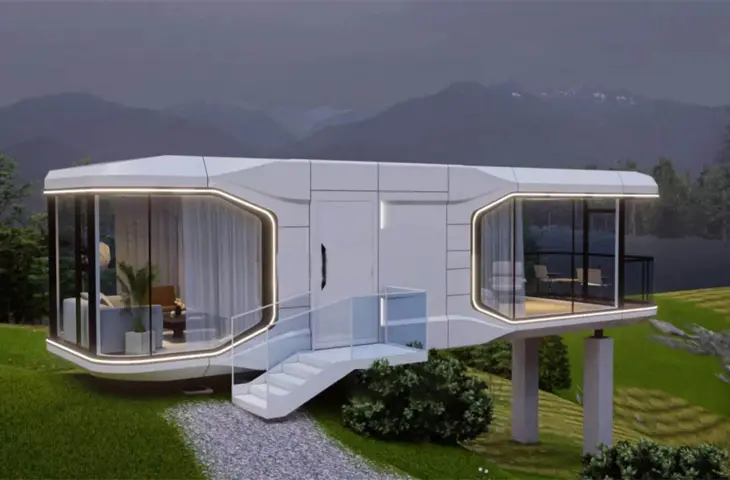
In an era where urban space is increasingly precious and environmental consciousness continues to grow, a revolutionary approach to housing has emerged from the intersection of innovative design and practical necessity. Welcome to the world of capsule homes – a sophisticated, efficient, and surprisingly comfortable solution to modern living challenges. This comprehensive guide serves as your definitive introduction to understanding what capsule homes truly represent, how they’ve evolved, and why they’re capturing the imagination of forward-thinking individuals worldwide.
Definition and Evolution of Capsule Homes
At their core, capsule homes are compact, self-contained living units designed to maximize functionality within minimal square footage. These innovative dwellings typically range from 100 to 400 square feet, though definitions vary by manufacturer and application. What distinguishes capsule homes from merely “small houses” is their intelligent engineering – every inch is purposefully designed, every feature multifunctional, and every material carefully selected to create a living experience that feels spacious despite its compact dimensions.
The concept of capsule living has surprisingly deep roots, tracing back to Japanese capsule hotels of the 1970s. However, the modern capsule home movement represents a significant evolution from those utilitarian sleeping pods. Today’s capsule homes incorporate full living facilities, sophisticated design aesthetics, and advanced technology while maintaining the space efficiency that originally defined the concept. This evolution reflects changing societal attitudes toward consumption, sustainability, and what truly constitutes a comfortable home.
The transformation from basic capsules to sophisticated living spaces occurred gradually through technological advancements in materials, manufacturing, and design thinking. Early iterations focused primarily on minimizing square footage, but contemporary capsule homes balance compactness with livability, proving that smaller spaces can offer equal or superior comfort to traditional homes when designed with intelligence and intention. This philosophical shift – from “how small can we make it” to “how well can we live in this space” – represents the true maturity of the capsule home movement.
How Capsule Homes Differ from Traditional Tiny Houses
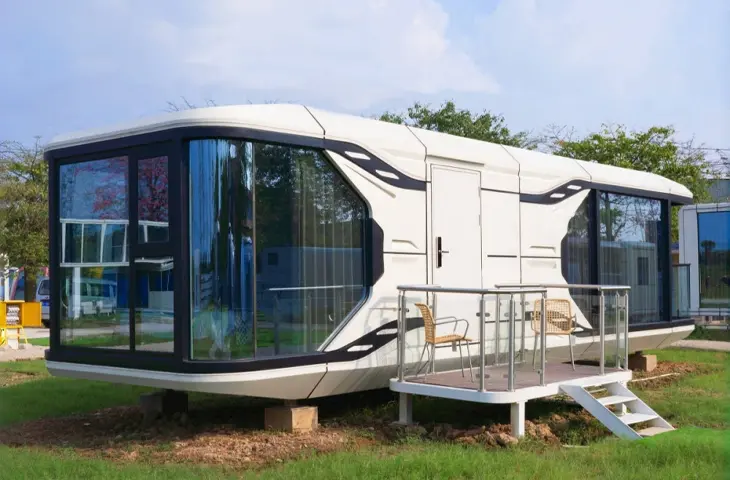
While both capsule homes and tiny houses represent responses to housing challenges and minimalist living ideals, several fundamental distinctions separate these two approaches to compact living. Understanding these differences is crucial for anyone considering alternative housing options.
First, construction methodology diverges significantly. Traditional tiny houses often follow conventional building practices, just on a smaller scale, with framing, insulation, and finishing completed primarily on-site. Capsule homes, particularly those from manufacturers like PodVoyager, are engineered for factory fabrication. This distinction matters profoundly for quality control, construction efficiency, and design consistency. Our manufacturing process at PodVoyager’s Linyi facility allows for precision engineering that would be challenging to achieve in traditional construction environments.
Second, transportation and installation approaches differ markedly. Many tiny houses are built on trailer foundations for mobility, which necessarily influences their design and structural integrity. Capsule homes typically employ modular construction principles that allow for transport in sections or as complete units, then installation on permanent or semi-permanent foundations. This distinction affects not only mobility but also long-term durability and insulation performance. You can learn more about our transportation and installation processes on our services page.
Third, design philosophy varies between the two approaches. Tiny houses often prioritize a traditional residential aesthetic, merely scaled down. Capsule homes frequently embrace their modernity, with clean lines, integrated technology, and materials that speak to contemporary design sensibilities. This doesn’t mean capsule homes lack warmth or character – far from it. Rather, they express these qualities through different design languages that many find refreshingly honest about their compact nature.
Finally, the relationship with regulations differs significantly. Tiny houses on wheels often exist in regulatory gray areas, while capsule homes designed as permanent or semi-permanent structures typically comply with established building codes. At PodVoyager, we engineer our homes to meet or exceed international standards, providing peace of mind that’s sometimes elusive in the tiny house world. Our compliance documentation details how we address various regulatory requirements.
Global Trends in Micro-Living Architecture
The capsule home movement exists within a broader context of architectural innovation responding to global challenges. Understanding these larger trends helps contextualize why capsule homes have moved from niche curiosity to viable mainstream housing option in many markets.
Urbanization represents perhaps the most significant driver of micro-living innovation. As cities worldwide face population pressures and resulting housing shortages, architects and developers have increasingly turned to intelligent space utilization as a solution. Capsule homes offer one of the most promising approaches, providing quality housing in spaces that might otherwise go unused – from rooftop installations to infill developments in underutilized urban lots.
Environmental consciousness has accelerated interest in compact living. The construction industry accounts for approximately 39% of global carbon emissions, with building operations contributing significantly to energy consumption. Capsule homes address both concerns through reduced material requirements and exceptional energy efficiency. The smaller footprint naturally reduces heating and cooling demands, while modern insulation and window technologies further enhance performance. Our sustainability initiatives detail how PodVoyager addresses these environmental priorities.
Technological advancement has enabled the capsule home revolution in ways impossible just a decade ago. Smart home systems allow for sophisticated environmental control in compact spaces. Advanced materials provide durability without bulk. Digital design tools enable precise optimization of every square inch. Manufacturing technologies facilitate quality production at scales that make capsule homes economically viable. These converging technological trends have removed previous limitations on what compact living could achieve.
Cultural shifts toward experiential living and minimalism have created receptive markets for capsule homes. As people increasingly value experiences over possessions and seek to reduce life’s complexities, the capsule home represents a physical manifestation of these values. This isn’t merely about living with less, but about living better with what truly matters – a philosophy that resonates particularly with younger generations but increasingly across demographic boundaries.
Finally, economic factors have made capsule homes increasingly attractive. In many markets, traditional housing has become unaffordable for substantial portions of the population. Capsule homes offer an alternative pathway to homeownership or quality rental accommodation without the financial burdens of conventional housing. This economic accessibility, combined with lifestyle benefits, explains the growing global embrace of compact living solutions.
The Engineering Behind Capsule Homes
The appeal of capsule homes extends far beyond their compact dimensions to encompass sophisticated engineering that makes comfortable living possible in limited spaces. Understanding these engineering principles reveals why well-designed capsule homes offer substantially more than their square footage might suggest.
Structural Design Principles
Capsule home engineering begins with structural integrity – a non-negotiable requirement made more challenging by compact dimensions that limit traditional reinforcement options. Successful capsule homes employ several key structural principles that distinguish them from merely scaled-down conventional construction.
Modular framing systems represent one of the most important innovations in capsule home engineering. Unlike traditional wood framing that relies on numerous individual components, modular systems employ engineered panels or complete wall sections manufactured under controlled factory conditions. This approach provides superior strength-to-weight ratios, essential for structures that may need to withstand transportation stresses before reaching their final location. At PodVoyager, our structural systems undergo rigorous testing to ensure they meet or exceed international standards for safety and durability.
Integrated load distribution represents another critical engineering consideration. In conventional homes, loads naturally distribute across larger floor areas and multiple structural elements. Capsule homes must achieve similar performance within compact footprints, requiring careful engineering of how weight transfers from roofs to walls to foundations. Our engineering team employs advanced modeling software to optimize load paths, ensuring structural integrity regardless of installation conditions or environmental factors.
Transportation considerations uniquely influence capsule home engineering. Unlike site-built structures, capsule homes must withstand the dynamic forces encountered during transport from factory to installation site. This requirement influences everything from connection design to material selection, with engineers balancing transportation durability against other performance requirements. Our expertise in this area, developed through delivering homes to diverse global locations, informs every aspect of PodVoyager’s structural design philosophy.
Climate adaptability represents a final crucial structural consideration. Capsule homes installed in different environments face varying challenges – from snow loads in northern climates to wind resistance in coastal areas to seismic considerations in active regions. Engineering solutions must address these variables without compromising the compact efficiency that defines capsule homes. Our climate-specific engineering packages, detailed on our technical specifications page, demonstrate how we tailor structural solutions to installation environments.
Space Optimization Techniques
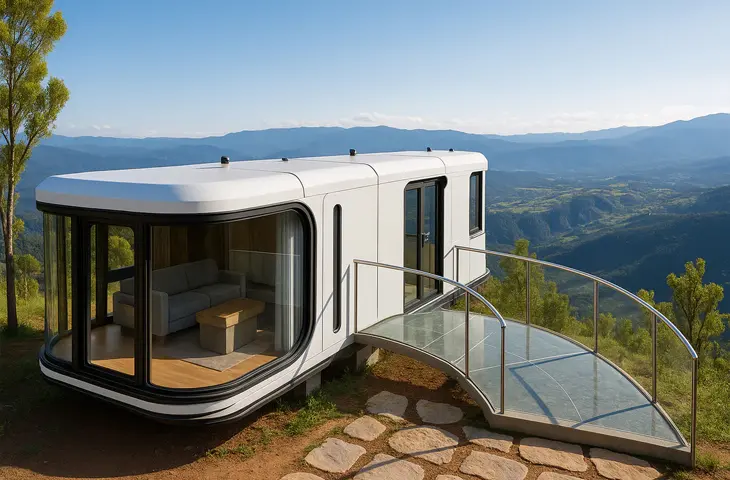
The true magic of capsule homes lies not in their small size but in how intelligently they utilize every cubic inch of available space. Space optimization represents both an art and a science, combining ergonomic principles with creative design thinking to create environments that feel substantially larger than their physical dimensions.
Vertical space utilization represents one of the most effective strategies in capsule home design. While traditional homes primarily organize living horizontally, capsule homes think in three dimensions, using height as a functional resource rather than merely architectural volume. Lofted sleeping areas, elevated storage solutions, and tiered living spaces all capitalize on vertical dimension, creating functional separation without consuming precious floor area. This vertical thinking requires careful attention to ceiling heights, sight lines, and circulation patterns to avoid creating cramped or oppressive environments.
Multifunctional design elements transform capsule homes from merely small spaces to intelligently efficient ones. Every component serves multiple purposes – seating converts to sleeping surfaces, tables fold away when not needed, storage integrates into unexpected locations. This multifunctionality extends beyond furniture to architectural elements themselves, with walls containing storage, floors concealing mechanical systems, and windowsills doubling as worksurfaces. The cumulative effect creates homes where every element earns its place through utility rather than convention.
Zoning strategies organize compact spaces into functional areas without physical barriers that would make spaces feel smaller. Rather than walls, designers use level changes, lighting variations, material transitions, and furniture placement to delineate living, sleeping, working, and dining areas within single rooms. This open-yet-organized approach maintains visual spaciousness while providing psychological separation between different activities – crucial for maintaining sanity in compact living environments.
Visual expansion techniques employ design psychology to make spaces feel larger than their physical boundaries. Strategic mirror placement, continuous flooring materials, carefully scaled furnishings, and uninterrupted sight lines all contribute to spatial perception. Perhaps most importantly, connection to outdoor spaces through generous windows and thoughtful transitions blurs boundaries between interior and exterior, effectively borrowing outdoor space for psychological benefit. Our design gallery showcases how these techniques create surprisingly spacious-feeling interiors.
Ergonomic efficiency ensures that compact spaces function comfortably for human inhabitants. This involves more than merely fitting necessary elements into limited square footage – it requires understanding how people move through and use spaces in daily life. Circulation paths must accommodate natural movement patterns, storage must align with how people actually access belongings, and worksurfaces must support comfortable use. This human-centered approach distinguishes truly livable capsule homes from merely small structures.
Material Innovations in Compact Construction
The materials used in capsule home construction significantly influence not only durability and appearance but also spatial efficiency and environmental performance. Recent innovations in material science have particularly benefited compact construction, enabling previously impossible combinations of strength, insulation value, and thin profiles.
Advanced composite panels represent perhaps the most significant material innovation for capsule homes. These engineered materials combine structural strength with insulation properties in thin profiles ideal for space-constrained applications. Unlike traditional construction that requires separate structural elements, insulation layers, and finish materials, composite systems integrate these functions, saving precious inches that translate directly to more usable interior space. At PodVoyager, we’ve developed proprietary composite systems optimized specifically for capsule home applications, balancing performance characteristics with practical manufacturing considerations.
High-performance insulation materials enable exceptional thermal efficiency without consuming interior space. Traditional insulation materials like fiberglass require substantial thickness to achieve high R-values, while newer options like vacuum-insulated panels and aerogel-infused materials provide superior performance in dramatically thinner profiles. These space-saving insulations particularly benefit capsule homes where every inch counts, allowing for better thermal envelopes without compromising interior dimensions. Our material specifications, detailed in our technical documentation, explain how we select and apply these advanced insulation solutions.
Engineered wood products offer strength and stability advantages over traditional lumber, particularly important in modular construction where components must maintain precise dimensions through manufacturing, transportation, and installation. Cross-laminated timber, laminated strand lumber, and similar engineered woods provide consistent performance with minimal waste – crucial considerations for sustainable compact construction. These materials also facilitate precision joining systems that enhance structural integrity while simplifying assembly.
Smart surface materials contribute to capsule home livability through integrated functionality. From antimicrobial coatings that maintain healthier environments in compact spaces to phase-change materials that absorb and release heat to stabilize temperatures, these advanced surfaces perform multiple functions beyond their primary purpose. Such integrated solutions prove particularly valuable in capsule homes where separate systems would consume precious space.
Sustainable material selections align capsule home construction with the environmental values that often motivate interest in compact living. Recycled content, rapidly renewable resources, and low-emission materials all contribute to reduced environmental impact while maintaining performance standards. Our commitment to sustainable materials extends beyond selection to encompass full lifecycle considerations, including eventual deconstruction and material recovery – details explored in our sustainability reporting.
PodVoyager’s Design Philosophy
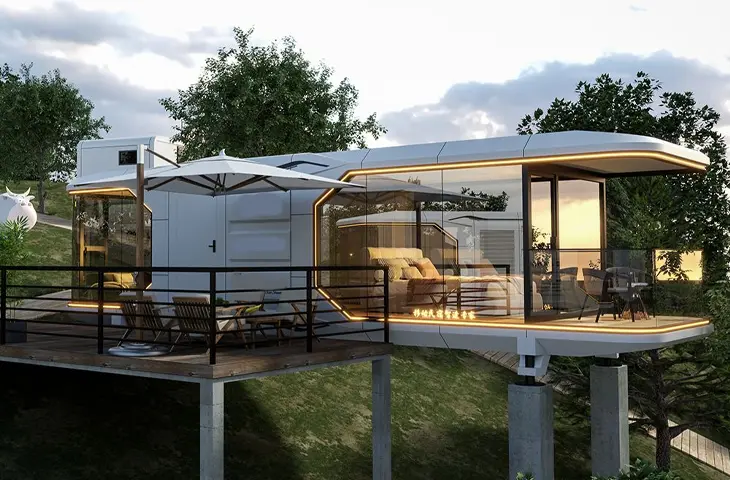
At PodVoyager, we approach capsule home design with a distinctive philosophy developed through years of research, manufacturing experience, and client collaboration. Our design principles extend beyond mere aesthetics to encompass how people actually live in and experience compact spaces, resulting in homes that feel intentionally designed rather than merely dimensionally constrained.
Our Approach to Functional Minimalism
Functional minimalism represents the cornerstone of PodVoyager’s design philosophy – a principle that prioritizes essential functions without unnecessary elaboration while ensuring that every included element serves its purpose exceptionally well. This approach differs significantly from both stark minimalism that sacrifices comfort and conventional design that includes elements from habit rather than necessity.
Purpose-driven design begins with understanding how specific clients will use their capsule homes. Rather than applying one-size-fits-all solutions, we engage in detailed discussions about lifestyle patterns, daily routines, and personal priorities. This client-centered approach ensures that designs support actual living patterns rather than theoretical ideals. A home office capsule requires different optimization than a weekend retreat, just as a primary residence demands different considerations than a backyard studio. Our design consultation process, detailed on our consultation page, facilitates this understanding before any design work begins.
Quality-over-quantity selection guides every specification decision. In compact spaces, each element receives greater attention and use, making quality particularly important. We select fixtures, finishes, and furnishings based on durability, performance, and aesthetic harmony rather than mere cost considerations. This focus on quality extends to often-overlooked elements like door hardware, window mechanisms, and connection details – components that significantly influence daily experience in compact environments.
Integrated technology enhances functionality without consuming additional space. Smart home systems, efficient appliances, and space-saving mechanical equipment all contribute to livability while maintaining the clean aesthetics of functional minimalism. Our technology integration philosophy prioritizes intuitive operation and reliable performance, ensuring that technological enhancements genuinely improve living experience rather than adding complexity.
Sensory consideration represents an often-overlooked aspect of functional minimalism. Compact spaces amplify sensory experiences – both positive and negative. We carefully consider acoustics, lighting quality, tactile surfaces, and even olfactory factors (through material selection and ventilation design) to create environments that feel calm and comfortable rather than merely efficient. This holistic approach to sensory experience distinguishes PodVoyager designs that people enjoy inhabiting from merely functional small spaces.
Factory Precision Engineering from Our Linyi Facility
PodVoyager’s manufacturing approach represents a significant departure from traditional construction methods, with profound implications for quality, consistency, and design realization. Our facility in Linyi, Shandong, combines advanced technology with skilled craftsmanship to produce capsule homes that meet exacting standards impossible to achieve through conventional site construction.
Digital fabrication begins our manufacturing process, with computer-controlled equipment translating design specifications into precisely cut and formed components. This digital precision ensures consistency across all production elements, with tolerances measured in millimeters rather than centimeters. Such precision proves particularly valuable in compact construction where small dimensional errors create significant functional problems. Our investment in advanced fabrication technology reflects our commitment to precision as a foundation of quality.
Controlled environment manufacturing eliminates variables that plague traditional construction. Temperature, humidity, and cleanliness all remain consistent in our factory setting, preventing material expansion/contraction issues, moisture damage during construction, and contamination that can affect finishes and indoor air quality. This controlled environment extends manufacturing timelines across seasons without weather-related delays or compromises.
Systematic assembly processes organize manufacturing into logical sequences that optimize both efficiency and quality. Unlike traditional construction where multiple trades work simultaneously in potentially conflicting sequences, our factory process follows carefully choreographed steps that ensure each phase completes properly before subsequent work begins. This systematic approach prevents the quality compromises that often occur when construction processes overlap or conflict.
Integrated quality control occurs at multiple points throughout manufacturing rather than merely as final inspection. Each component undergoes verification before assembly, each sub-assembly receives validation before integration, and each completed unit undergoes comprehensive testing before leaving our facility. This layered quality approach catches potential issues early when corrections are simplest and least costly. Our quality assurance protocols detail the specific checks and validations each PodVoyager home undergoes.
Skilled craftsmanship complements technological precision throughout our manufacturing process. While automation handles repetitive precision tasks, experienced artisans oversee critical assembly stages, apply finishes, and conduct final inspections. This combination of technological consistency and human judgment represents the ideal manufacturing approach for products that must meet both technical specifications and aesthetic standards.
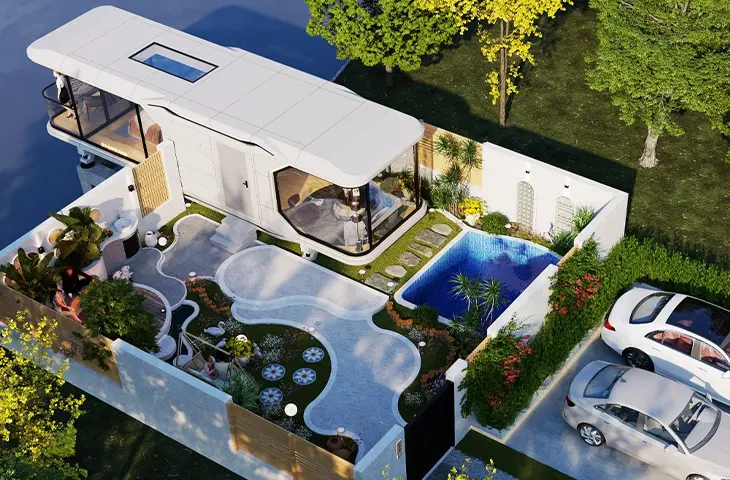
Customization Capabilities Without Compromising Quality
A common misconception about factory-built homes suggests that customization necessarily compromises efficiency or quality. At PodVoyager, we’ve developed systems that accommodate extensive customization while maintaining the manufacturing precision and quality standards that define our brand.
Modular design principles provide the foundation for our customization approach. Rather than creating entirely unique designs for each client, we’ve developed systems of compatible components that can be combined in numerous configurations. This modular approach allows customization within parameters that ensure structural integrity, manufacturing efficiency, and quality consistency. Clients choose from curated options rather than creating completely novel solutions – a approach that balances personalization with practical manufacturing considerations.
Parametric design tools enable clients to visualize customization options and understand their implications before committing to specifications. Our online configuration tools, accessible through our design studio portal, allow prospective clients to experiment with layout variations, material selections, and feature options while receiving real-time feedback on feasibility and implications. This interactive approach makes customization accessible and understandable rather than overwhelming.
Curated material palettes offer selection within quality-controlled parameters. Rather than unlimited material options that might compromise performance or durability, we offer carefully selected alternatives that meet our quality standards while providing aesthetic variety. This curation ensures that customization choices align with long-term performance requirements rather than merely immediate aesthetic preferences.
System integration protocols ensure that customized features work harmoniously with standard systems. Whether adding specialized technology, unique storage solutions, or accessibility features, our engineering team verifies compatibility and performance before approving customization requests. This integration-focused approach prevents the functional problems that sometimes occur when custom elements interface with standard systems.
Phased implementation allows for customization that extends beyond initial manufacturing. Some features prove more practical to add during installation or even after occupancy rather than during factory production. Our customization planning identifies which elements belong to which phase, optimizing both manufacturing efficiency and final results. This phased approach particularly benefits clients with evolving needs or those implementing capsule homes in stages.
Practical Considerations
Understanding the theoretical advantages of capsule homes represents only part of the decision-making process. Practical considerations significantly influence whether capsule living aligns with specific needs, circumstances, and expectations. This section explores key practical factors that prospective capsule home residents should consider before committing to this innovative living approach.
Ideal Applications and Use Cases
Capsule homes excel in specific applications while proving less suitable for others. Understanding these optimal use cases helps prospective residents determine whether their needs align with capsule home strengths.
Urban infill developments represent perhaps the ideal application for capsule homes. In cities where land costs prohibit conventional development or where small, irregularly shaped lots remain undeveloped, capsule homes provide quality housing without requiring standard building footprints. Their modular nature allows installation in challenging locations – from narrow alley lots to rooftop placements to spaces between existing structures. This application particularly benefits cities addressing housing shortages without land for conventional development.
Accessory dwelling units (ADUs) have emerged as a major application for capsule homes in suburban and even rural settings. Homeowners install these compact units as backyard offices, guest houses, rental properties, or housing for family members. The self-contained nature of capsule homes makes them ideal for such applications, providing complete living facilities without requiring connection to main house systems in many configurations. This use case has grown substantially as municipalities increasingly permit ADUs to address housing shortages.
Specialized accommodations benefit tremendously from capsule home approaches. Whether workforce housing for remote projects, seasonal staff accommodations for resorts, temporary housing for educational institutions, or research stations for field work, capsule homes provide quality living conditions in locations or situations where traditional construction proves impractical or cost-prohibitive. Their rapid deployment capability and minimal site impact make them particularly valuable for temporary or seasonal applications.
Primary residences work well as capsule homes for specific demographics and lifestyles. Individuals or couples without children, particularly those with minimalist inclinations or strong environmental values, often find capsule homes perfectly suited to their needs. The key consideration involves honest assessment of space requirements and lifestyle compatibility – some people thrive in compact environments while others find them constraining regardless of design quality.
Hospitality applications have embraced capsule homes for creating unique guest experiences. From glamping resorts to boutique hotel additions to special event accommodations, capsule homes offer distinctive stays that command premium rates. Their compact footprint allows higher density than traditional cabins or hotel rooms, while their distinctive design creates memorable experiences that guests increasingly seek. Our hospitality solutions page details how we’ve tailored designs for this growing market.
Site Preparation Requirements
Successful capsule home installation begins with proper site preparation – an often overlooked aspect that significantly influences long-term performance and satisfaction. Understanding these requirements helps prospective owners plan effectively and avoid costly mistakes.
Foundation considerations vary based on capsule home design, local conditions, and intended permanence. Unlike traditional homes with standardized foundation approaches, capsule homes offer multiple options including concrete piers, helical screw piles, concrete slabs, and even existing structures like rooftops or parking areas. The optimal choice depends on soil conditions, climate factors, installation permanence, and local regulations. Our site assessment guidelines, available through our technical resources, help clients evaluate their specific situations.
Utility connections require advance planning, particularly for off-grid installations or sites with limited infrastructure. While capsule homes typically require standard utility connections (electricity, water, sewer), their compact nature and efficient systems sometimes allow alternative approaches like solar power, rainwater collection, or composting toilets. Understanding local utility availability, connection costs, and regulatory constraints proves essential before committing to specific sites. We provide detailed utility planning checklists to clients during our consultation process.
Access limitations significantly influence capsule home feasibility. Unlike traditional construction where materials arrive in pieces, capsule homes typically arrive as complete units or large modules requiring clear access paths. Overhead obstructions (wires, trees), narrow roadways, tight turns, and weak bridges can all prevent delivery to otherwise suitable sites. Professional site assessment before purchase prevents discovering access limitations after committing to a specific home design.
Regulatory compliance varies dramatically between jurisdictions, affecting everything from foundation requirements to setback distances to utility connections. Some municipalities enthusiastically embrace alternative housing options while others maintain restrictive codes developed for conventional construction. Researching local regulations before site selection prevents costly surprises and delays. Our experience with diverse regulatory environments helps clients navigate these complexities – experience detailed in our regulatory guidance documentation.
Environmental factors influence both site selection and preparation requirements. Solar orientation affects energy performance, wind patterns influence structural considerations, drainage patterns impact foundation design, and vegetation management affects both installation and ongoing maintenance. Professional site analysis considers these factors holistically rather than merely evaluating whether a site is physically large enough for the structure itself.
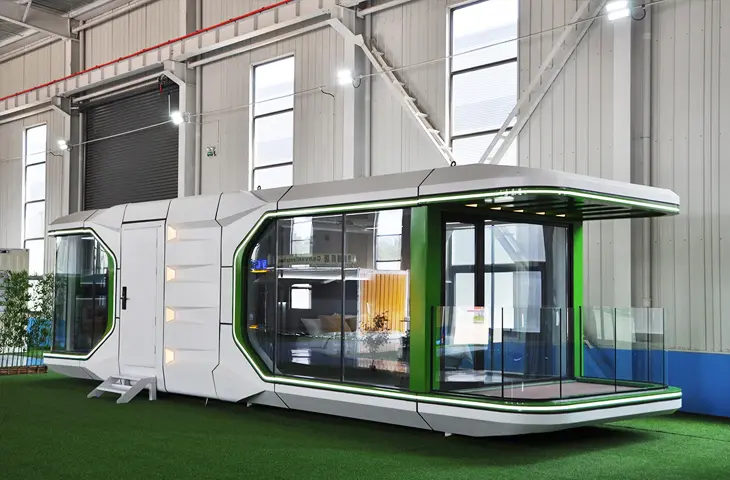
Long-term Livability Factors
The decision to embrace capsule living involves considerations beyond initial installation to encompass how these homes perform and feel over years of occupation. Several factors significantly influence long-term satisfaction with capsule home living.
Storage strategy proves crucial for long-term capsule home livability. Unlike conventional homes where unused items can be relegated to attics, basements, or spare rooms, capsule homes require disciplined approaches to possessions. Successful long-term residents typically adopt regular curation practices, digital alternatives to physical items, and creative storage solutions that maximize every cubic inch. The psychological adjustment to living with fewer physical possessions represents a significant consideration for many prospective residents.
Maintenance requirements differ from conventional homes in both positive and challenging ways. The smaller physical scale reduces some maintenance tasks (less surface area to paint, smaller roofs to maintain) while potentially increasing others (compact mechanical systems may require more frequent servicing). Material quality significantly influences long-term maintenance, with higher-quality components typically requiring less frequent attention despite more intensive use in compact environments. Our maintenance guidelines help owners preserve their investment and enjoyment over time.
Social considerations affect capsule home livability, particularly for primary residences. Entertaining approaches necessarily differ in compact spaces, often shifting from large indoor gatherings to smaller, more intimate occasions or outdoor events. Relationship dynamics within households adapt to closer proximity, requiring communication and consideration sometimes unnecessary in larger homes where individuals can more easily find private space. These social adaptations prove rewarding for many but challenging for others, making honest self-assessment important before committing to capsule living.
Climate adaptation varies between capsule home designs and installations. Well-insulated homes with proper solar orientation perform excellently in diverse climates, but extreme conditions require specific design responses. Supplemental heating or cooling may prove necessary in certain climates despite efficient envelopes, while humidity control requires particular attention in compact spaces where moisture has fewer places to disperse. Our climate-specific design packages address these considerations based on installation location and conditions.
Future flexibility represents both an advantage and consideration for capsule homes. Their modular nature often allows reconfiguration or expansion as needs change, but compact footprints inherently limit certain adaptations. Considering how life might change over coming years – career shifts, relationship changes, family expansion, mobility changes – helps determine whether a specific capsule home design accommodates likely futures or represents a shorter-term solution.
Getting Started Guide
For those intrigued by capsule home possibilities, taking first steps requires thoughtful approach rather than impulsive decisions. This guide outlines a systematic process for exploring whether capsule living aligns with your needs, values, and circumstances.
How to Assess if a Capsule Home Suits Your Needs
Honest self-assessment represents the essential first step in considering capsule home living. Several frameworks help evaluate personal compatibility with compact living before investing significant time or resources.
Lifestyle pattern analysis examines how you actually live rather than how you imagine living. Documenting daily routines, weekly patterns, and seasonal variations provides objective data about space requirements. How much time do you spend at home versus elsewhere? What activities occur at home that genuinely require dedicated space? Which possessions prove truly essential versus merely habitual? This evidence-based approach prevents decisions based on theoretical ideals rather than actual living patterns.
Psychological comfort assessment explores your relationship with space and possessions. Some people feel energized by efficient, minimalist environments while others find them constraining regardless of design quality. Reflecting on past living situations – which felt comfortable, which felt restrictive – provides clues about your spatial preferences. Visiting well-designed compact spaces, whether capsule homes or other efficient designs, offers experiential data that theoretical consideration cannot provide.
Practical requirement evaluation identifies non-negotiable needs that any dwelling must accommodate. Accessibility considerations, work-from-home requirements, hobby space needs, pet accommodations, and similar practical factors determine minimum viable spaces regardless of design efficiency. Being honest about these requirements prevents choosing spaces that cannot accommodate essential aspects of your life.
Future scenario consideration looks beyond current circumstances to likely coming changes. While crystal balls remain unreliable, considering probable career developments, relationship changes, family planning, mobility shifts, and other foreseeable changes helps select homes that accommodate evolution rather than requiring premature replacement. This forward-looking approach proves particularly important with significant investments like housing.
Value alignment examination explores whether capsule living aligns with your broader priorities. If environmental responsibility, financial freedom, simplified living, or design appreciation represent important values, capsule homes may offer satisfying alignment. If traditional notions of success, space-intensive hobbies, or frequent large-scale entertaining dominate your priorities, conventional housing may better serve your needs despite capsule homes’ theoretical efficiency.
Planning and Budgeting Considerations
Realistic planning and budgeting distinguish successful capsule home projects from disappointing experiences. Several key considerations help develop practical plans and budgets.
Total cost analysis looks beyond the capsule home itself to encompass all project expenses. Site preparation, foundation construction, utility connections, delivery and installation, permits and fees, landscaping, and initial furnishings all add to the base home cost. Developing comprehensive budgets that include all these elements prevents unpleasant surprises that strain finances or compromise project completion. Our project planning tools help clients develop realistic total budgets based on their specific situations.
Financing exploration investigates funding options for capsule home projects. Traditional mortgages sometimes prove challenging for non-standard dwellings, while construction loans, personal loans, manufacturer financing, or savings may offer alternatives. Understanding financing options early prevents developing plans that cannot be funded. We maintain relationships with financial institutions familiar with alternative housing to help clients explore appropriate options.
Timeline development creates realistic schedules for capsule home projects. Unlike conventional construction where delays are commonplace, factory-built homes typically follow predictable production schedules, but site preparation, regulatory approvals, and installation coordination require careful sequencing. Developing phased timelines with appropriate buffers prevents frustration from unexpected delays. Our project management approach, detailed in our process documentation, provides clients with clear timeline expectations from initial consultation through final installation.
Regulatory navigation plans for the approval processes required in most jurisdictions. Building permits, zoning variances, utility approvals, and other regulatory requirements vary dramatically between locations, with processing times ranging from weeks to months. Researching requirements early prevents purchasing homes that cannot be legally installed at chosen sites. Our regulatory experience helps clients navigate these processes efficiently.
Contingency planning prepares for unexpected developments that affect any construction project. Weather delays, material availability issues, regulatory surprises, and site condition discoveries all potentially impact capsule home projects. Including time and financial contingencies in plans creates resilience when unexpected challenges inevitably arise. Our experience with diverse projects helps clients develop appropriate contingency plans based on their specific risk factors.
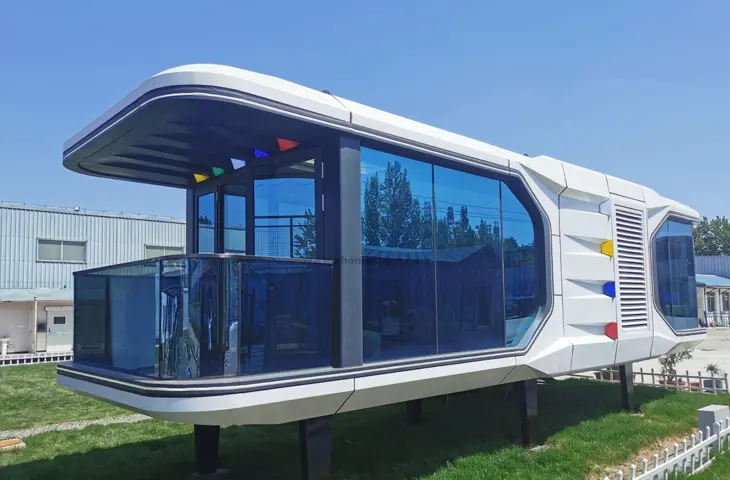
First Steps in the Capsule Home Journey
For those ready to explore capsule homes seriously, several practical first steps initiate the process while minimizing commitment until appropriate information has been gathered.
Initial research should balance broad exploration with focused investigation. General information about capsule living establishes context, while specific investigation of manufacturers like PodVoyager provides concrete options. Our research resources offer balanced information that helps prospective clients understand both the general possibilities and our specific approaches. This research phase should include reviewing completed projects, technical specifications, and client testimonials to develop informed perspectives.
Site evaluation represents a crucial early step for those with specific locations in mind. Professional assessment identifies potential challenges and opportunities before design or purchasing decisions. Even preliminary self-evaluation using our site assessment guidelines helps determine whether specific locations warrant further investigation. For those without specific sites, understanding general site requirements helps evaluate potential locations during search processes.
Preliminary consultation with manufacturers provides specific information tailored to your interests and circumstances. Unlike general research, consultations address your particular questions and situations, providing customized guidance about feasibility, options, and next steps. Our consultation process, described on our consultation page, begins with understanding your situation before offering specific recommendations, ensuring relevant guidance rather than generic information.
Financial preliminary qualification explores practical constraints before developing detailed plans. Understanding budget parameters, financing options, and payment schedules helps focus investigations on viable options rather than theoretical possibilities. Our financial consultants help clients understand realistic parameters based on their financial situations and goals.
Design exploration through visualization tools provides tangible experience with options before commitment. Our design studio tools allow prospective clients to experiment with layouts, materials, and features, developing understanding of how different choices affect both aesthetics and functionality. This experiential learning proves more valuable than abstract consideration of options.
Ready to explore if capsule living is right for you? The journey begins with information and conversation rather than commitment. Our team brings years of experience helping people evaluate whether capsule homes align with their needs, values, and circumstances. We invite you to schedule a preliminary consultation with our design specialists to discuss your specific situation without obligation. Alternatively, explore our project gallery to see how others have successfully implemented capsule homes in diverse applications, or download our comprehensive planning guide for systematic approaches to evaluating capsule home possibilities. However you choose to begin, we’re here to provide the expertise, transparency, and guidance that transforms curiosity into informed decisions about innovative living solutions.
