
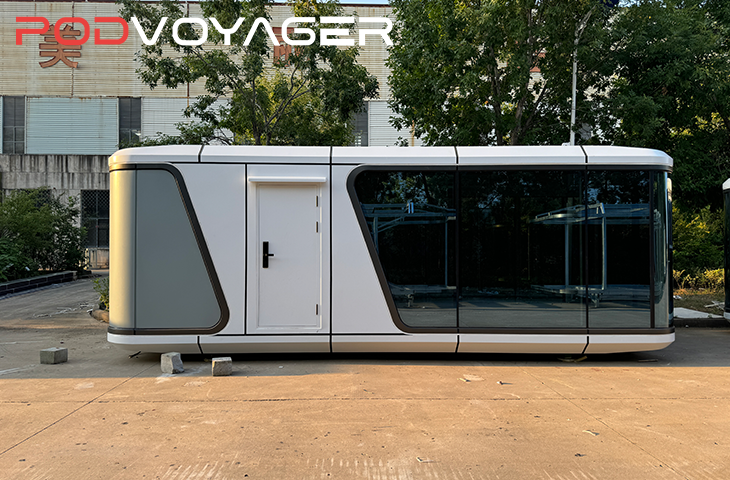
Capsule homes have quickly moved from “futuristic concept” to a practical, profitable housing solution—especially for glamping resorts, eco-tourism sites, remote offices, and modular living. If you’re comparing options for your land or business, one decision matters early: Expandable capsule homes vs. fixed capsule homes.
Both can look sleek, modern, and premium. But they behave very differently in shipping, installation, space planning, future expansion, and total cost. This guide breaks down the real-world pros and cons so you can pick the right type for your project—without surprises.
What Is a Fixed Capsule Home?
A fixed capsule home is a prefab unit with a non-expanding structure. What you see is what you get: the width and layout remain the same during transport and after installation.
Think of it as an “integrated cabin” style product: simple logistics, straightforward foundations, and faster decision-making.
Common fixed capsule use cases
- Glamping cabins with standard occupancy (1–2 guests)
- Compact resort rooms where land is limited
- On-site staff housing
- Sales offices / ticket booths / reception pods
- Quick-deploy rentals with minimal complexity
What Is an Expandable Capsule Home?
An expandable capsule home is designed to travel in a compact form and then expand on-site (often through fold-out sections or slide-out modules, depending on the design). The goal is to deliver a larger usable interior without paying the shipping cost of a wide-body unit.
Expandable designs are popular for buyers who want more space per shipment, or who need flexibility as their project grows.
Common expandable capsule use cases
- Larger glamping suites (2–4 guests)
- Family cabins or “premium lake-view” rooms
- Multi-functional layouts (living + meeting + storage)
- Project-based accommodations that may scale up later
- Sites where shipping width limits are strict
Quick Comparison: Expandable vs. Fixed Capsule Homes
Here’s the practical difference:
- Fixed capsule homes win on simplicity and speed.
- Expandable capsule homes win on space efficiency and scalability.
But the “best” option depends on your goals: occupancy, ROI targets, transport route, crane access, local regulations, and how standardized you want operations to be.
Pros of Expandable Capsule Homes
1) More usable space without oversized shipping
Expandable capsules can deliver a larger interior footprint while shipping in a more compact form—often reducing the need for special transport arrangements on certain routes.
Why it matters for resorts: You can offer higher-tier room categories (suite layouts, family rooms, premium lake-view experiences) and charge more per night.
2) Better layout flexibility for multi-purpose needs
Expandable designs tend to support:
- Separate sleeping + living zones
- Larger bathrooms
- Office-friendly layouts (desks, meeting corners)
- Extra storage and utility space
If you want one model to serve multiple business needs, expandable layouts can make that easier.
3) Easier long-term scaling for growing sites
For landowners building in phases, expandable units can fit a “start small, grow smart” approach:
- Phase 1: a few units + reception pod
- Phase 2: add more suites
- Phase 3: add office pods, dining pods, or larger family cabins
Expandable doesn’t always mean “add rooms later,” but it usually supports more design variety within one product family.
4) Higher perceived value in premium markets
Guests and buyers often equate “space + modern design” with quality. If you’re targeting:
- Luxury glamping
- High-end eco resorts
- Scenic destinations with premium nightly rates
…expandable suites can strengthen your positioning.
Cons of Expandable Capsule Homes
1) More mechanical complexity
Expandable structures typically include:
- Moving sections or fold-out mechanisms
- Additional sealing points
- More interfaces between panels and frames
That can mean more maintenance checkpoints over time than a fixed unit—especially in harsh climates or high-humidity environments.
2) More requirements for installation precision
Expandable units may demand:
- More precise leveling
- More careful site preparation
- Better coordination for unfolding/expansion steps
If your site is remote and your local crew is new to prefab installs, the learning curve can be slightly higher.
3) Higher upfront cost (often)
Expandable capsules can cost more due to engineering, hardware, and assembly steps. However, many buyers justify it through:
- Higher occupancy capacity
- Higher room rates
- Better guest experience
- More revenue per installed unit
4) Permit/regulation sensitivity in some regions
Local authorities may treat expandable structures differently depending on how they define “temporary,” “movable,” or “prefab building.” Always verify local requirements before committing to a design.
Pros of Fixed Capsule Homes
1) Simpler transportation and installation
Fixed capsule homes are generally:
- Easier to plan for shipping
- Faster to unload and place
- Less sensitive to leveling/expansion steps
For many projects, fixed units are the fastest path from purchase to “ready for guests.”
2) Strong structural simplicity and long-term durability
With fewer moving parts and fewer seal interfaces, fixed designs can be easier to maintain over years of operation. This is especially helpful if you plan to run:
- A standardized glamping site
- A rental business with consistent upkeep routines
- Multiple identical units for smooth operations
3) Faster decision-making for first-time buyers
If it’s your first prefab or capsule home project, fixed models reduce complexity. Fewer variables means fewer surprises.
4) Great for standardized room categories
Many resorts prefer a few repeatable room types. Fixed capsules make it easy to:
- Duplicate the same guest experience
- Standardize housekeeping and maintenance
- Keep spare parts consistent
Cons of Fixed Capsule Homes
1) Less interior space per unit (for the shipping footprint)
If you want “suite-level space,” a fixed unit may require:
- A larger overall model
- More shipping planning for wide-body transport
- A larger foundation footprint
2) Lower layout flexibility
Fixed capsules can still be customized, but there’s a limit to how much zoning you can achieve in a compact shell.
3) Scaling up can mean “adding more units,” not “expanding space”
If your business grows, fixed strategy usually means buying additional cabins rather than upgrading a single unit category.
Which One Is Better for Glamping and Tourism Projects?
If your goal is maximum ROI per room, the answer depends on your nightly pricing strategy:
Expandable tends to win when:
- You want premium room categories (suite/family)
- You’re in a scenic destination where guests pay for comfort
- You plan to differentiate with larger interiors and upgraded features
Fixed tends to win when:
- You want fast deployment with minimal risk
- You’re building standardized rooms at scale
- Your site has limited installation support or tight timelines
- You prioritize durability and operational simplicity
A common strategy is a mixed layout:
- Fixed capsules for standard rooms
- Expandable capsules for “premium suite” upsells
This creates pricing tiers without complicating your entire site.
Key Factors to Evaluate Before You Choose
1) Transport route and site access
Ask these questions early:
- Any narrow mountain roads?
- Any strict width/height limits?
- Is crane access available?
- How far is the site from the nearest port or logistics hub?
Transport realities can decide the model faster than aesthetics.
2) Occupancy and revenue plan
Define your target:
- 1–2 guests per unit (standard): fixed often works perfectly
- 2–4 guests per unit (family/suite): expandable becomes attractive
3) Climate and insulation requirements
For cold winters, high humidity, or coastal exposure, focus on:
- Insulation thickness and continuity
- Window performance (e.g., multi-layer glazing options)
- Door sealing and thermal bridging control
- Ventilation strategy
Both expandable and fixed can be built for extreme climates—but expandable designs deserve extra attention on sealing interfaces.
4) Maintenance capability
If your site has:
- A dedicated maintenance team → expandable is manageable
- Minimal staff and remote location → fixed can reduce workload
5) Your “future expansion” strategy
Do you want to:
- Add more units later (fixed-friendly), or
- Upgrade your room categories and layouts (expandable-friendly)?
Buyer Checklist: Choose the Right Capsule Type
Choose Expandable if you want:
- Larger space per unit
- Premium positioning and higher nightly rates
- Flexible interior zoning (suite/family/office)
- Growth-friendly product planning
Choose Fixed if you want:
- Fast setup with fewer operational variables
- Long-term simplicity and durability
- Standardized units for smooth resort operations
- Easier maintenance routines
FAQs
Are expandable capsule homes more expensive than fixed ones?
Often yes, because expandable designs usually require more engineering, hardware, and assembly steps. Many buyers offset this by charging higher nightly rates or supporting higher occupancy.
Do expandable capsule homes require more maintenance?
They can, mainly because moving sections and additional sealing interfaces introduce more inspection points over time. Good installation and routine checks reduce this risk significantly.
Which is better for a first-time glamping investor?
Fixed capsule homes are usually easier for first-time projects because transport and installation are simpler. A popular approach is starting with fixed units, then adding expandable “premium suites” later.
Can both types be used as offices?
Yes. Both can be configured as office pods, sales offices, reception units, or remote work cabins. Expandable designs may offer more room for desks, meeting space, and storage.
What matters more: the model type or the site plan?
Your site plan often matters more. A well-designed layout (views, privacy, walking paths, utilities routing, and room categories) can outperform the “best” unit choice.
Final Thoughts: The Best Capsule Home Is the One That Fits Your Business Plan
Expandable and fixed capsule homes are both strong solutions—but they serve different priorities.
- If you want speed, simplicity, and standardized operations, fixed capsules are hard to beat.
- If you want bigger space, higher-tier rooms, and scaling flexibility, expandable capsules can unlock premium value.
If you’re building a tourism or hospitality project, consider combining both: fixed units for stable volume + expandable units for high-margin upgrades.
