
Introduction – When Travel Meets a New Kind of Architecture
For decades, accommodation options in the tourism industry have followed familiar patterns: hotels, hostels, cabins, tents, bungalows, and later container homes. While each of these solutions has served different traveler needs, none fully addressed the growing demand for something truly unique, immersive, environmentally responsible, and operationally practical all at the same time.
As modern travelers evolve — especially younger generations and experience-driven tourists — the focus of travel is no longer only about the destination itself. The accommodation becomes part of the experience.
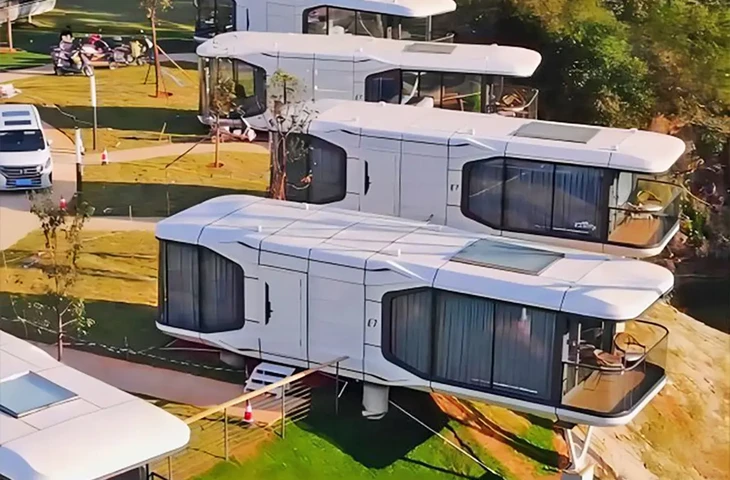
This shift has accelerated the global rise of space capsule houses as a new category of travel accommodation. These futuristic modular units are redefining how guests interact with nature, comfort, and architectural design.
At PodVoyager, we manufacture capsule houses in our own facility in Linyi, Shandong, China, supplying resorts, tourism developers, and hospitality operators worldwide. Through hundreds of project conversations and real-site deployments, we have witnessed firsthand how capsule housing is dramatically reshaping hospitality business models.
In this article, we look at real-world examples where capsule houses are not concepts or sketches — but profitable, operational, guest-loved accommodation solutions already transforming tourism.
The Mountain Escape Resort – Turning Isolation into Premium Appeal
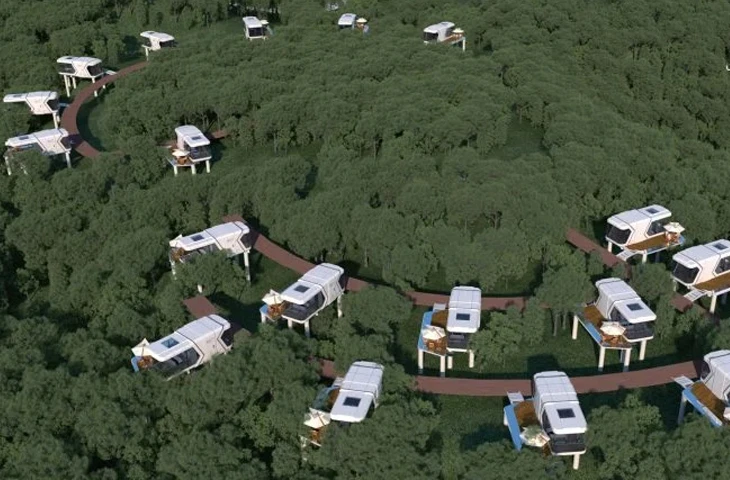
One of the most common challenges faced by mountain resorts is accessibility and limited construction options. Many scenic destinations sit on steep terrain where traditional hotel construction is either prohibited or financially unviable due to environmental regulations and transportation restrictions.
A mountain resort operator in Southeast Asia approached our team looking for an accommodation solution that could:
- Blend into the natural surroundings
- Be transported without heavy machinery access
- Avoid disruptive ground excavation
- Still deliver a premium luxury experience
The answer became capsule housing.
Using modular delivery methods, fully assembled units were transported along narrow access roads, then craned directly onto concrete pads built without extensive land grading. Each capsule was oriented to face valley panoramas with floor-to-ceiling panoramic glass walls, giving guests unobstructed views from their beds.
The results were immediate.
The resort reported:
- Full occupancy within the first operational season
- Room rates exceeding their standard cabins by 40%
- Strong social media marketing traction as guests shared the futuristic accommodations online
More importantly, capsules allowed the resort to expand accommodation capacity into previously unusable zones of their property without violating local environmental laws.
For the developer, capsule houses became not only a lodging solution — but a powerful marketing identity.
Desert Glamping Camps – Comfort Where Conventional Buildings Fail

Desert tourism has grown as travelers chase unforgettable landscapes, night skies, and solitude. But deserts present extreme construction challenges: high daytime heat, nighttime temperature swings, sandstorms, and limited water and power access.
One luxury desert camp operator needed accommodations that could provide:
- Superior insulation
- Climate-resistant exteriors
- Self-contained utility systems
- Minimal maintenance under harsh conditions
Capsule houses met all four criteria.
At PodVoyager, we customized insulation thickness, solar integration options, sand-proof exterior coatings, and sealed window structures specifically for desert environments. Each capsule included integrated climate systems capable of maintaining stable interior comfort regardless of outdoor extremes.
The project demonstrated how capsules can thrive where traditional hotels would fail due to infrastructure demands.
Within their first full season after opening:
- Occupancy levels exceeded expectations despite premium nightly rates.
- Energy costs dropped due to insulated efficiency.
- Maintenance teams reported fewer repairs compared to traditional tented or wooden facilities.
For guests, the experience became something extraordinary: sleeping under desert skies inside a high-tech capsule — where comfort and wilderness coexisted seamlessly.
Forest Retreat Lodges – Minimal Footprint, Maximum Immersion
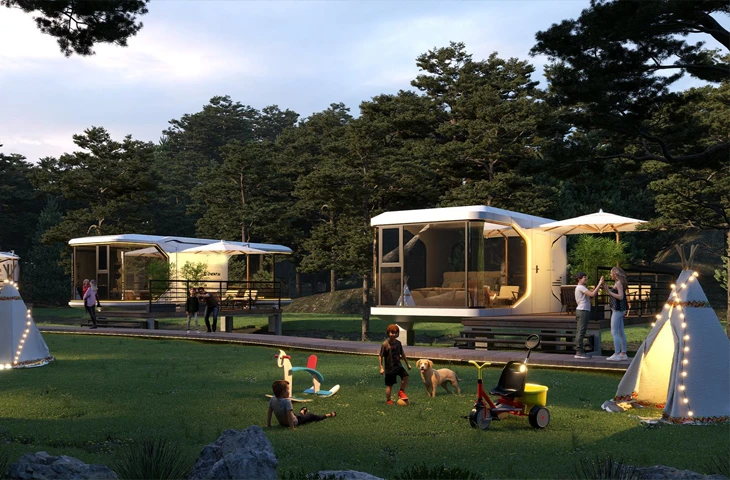
In protected forest areas, construction approvals are notoriously difficult due to environmental impact assessments. Tree removal, concrete pillar excavation, or permanent roadways are tightly restricted.
Several forest retreat development projects adopted capsule housing precisely because capsules allow “light-touch development.”
Capsules required:
- Small ground pads or adjustable steel foundations
- No large material storage or on-site assembly zones
- Minimal soil disturbance
This approach made approvals easier to secure and suited the ethos of sustainable tourism that eco-travelers expect.
Forest lodge guests described their stays as “sleeping within the landscape,” as the minimalist design framed the surrounding ecosystem rather than overpowering it.
The capsules’ panoramic windows transform sunrise mist, rainfall, and starry skies into immersive experiences. Unlike cabins that isolate guests within walls, capsules visually erase boundaries between interior luxury and exterior wilderness.
This emotional connection became one of the retreat’s strongest revenue drivers.
Coastal Cliff Resorts – Engineering With Views in Mind
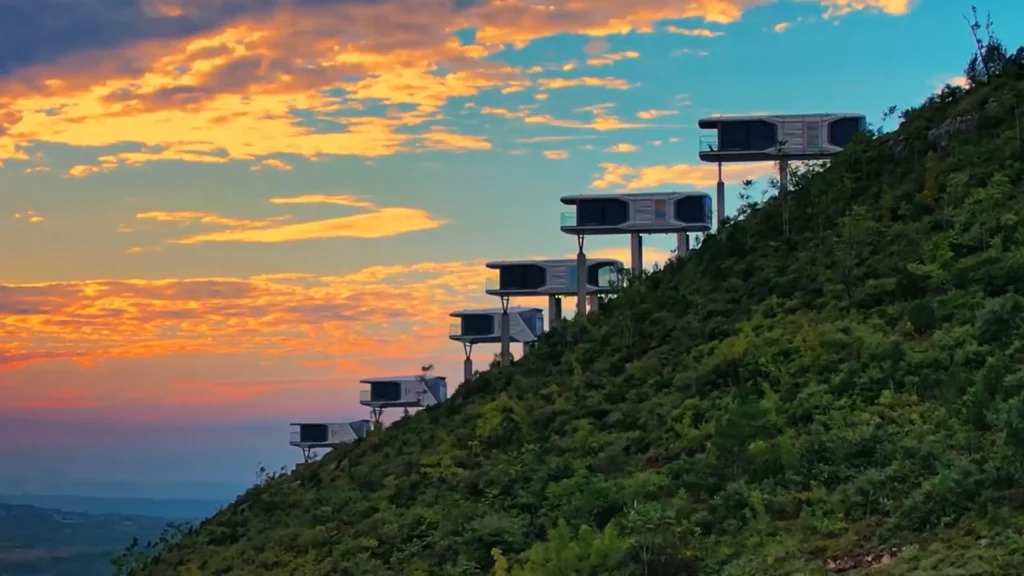
Along rugged coastlines, terrain challenges and unsafe cliff-edge construction zones prevent traditional development. Typically, hotels must be built inland or elevated on complicated structural systems.
Capsule houses enabled a different solution.
Because each unit could be individually placed via crane directly onto reinforced platforms, resort developers were able to position capsules along cliff edges without continuous concrete foundations.
The ability to micro-position each accommodation allowed:
- Maximum view potential for every guest
- Minimal visual obstruction between units
- Safer engineering loads distributed across lightweight structures
For guests, the sensation was staggering.
Waking up suspended above the sea within a glass-fronted capsule became a headline attraction and a viral marketing asset across social media platforms. These panoramic units were booked months in advance at premium rates.
Without capsule housing, such cliffside development would have remained either financially impossible or environmentally unacceptable.
Island Eco-Resorts – Logistics Made Simple
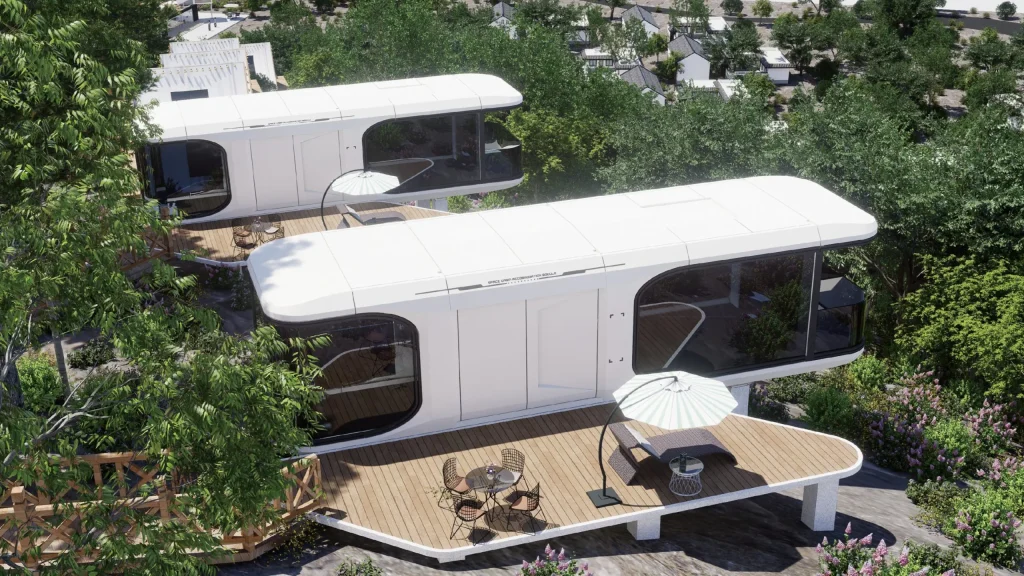
Island development is another area where capsule housing excels.
Transporting conventional building materials across water is costly and logistically complex. Islands often lack skilled construction labor, turning any traditional build into a multi-year project with escalating budgets.
Capsule houses bypass these issues entirely.
A Southeast Asia island eco-resort shipped pre-assembled capsules directly from Chinese ports to the island dock, requiring only cranes for placement and electrical hookups.
From shipment arrival to guest-ready accommodation:
Total deployment time: under two weeks for a 20-unit expansion.
What normally would have required months or even years of phased construction completed within a single operational off-season.
For the operator:
- Faster ROI realization
- No extended on-island workforce or equipment costs
- Zero on-site waste generation
Sustainability goals were upheld while profitability timelines benefited dramatically.
Safari Parks and Wildlife Lodges – Elevated Safety & Guest Comfort
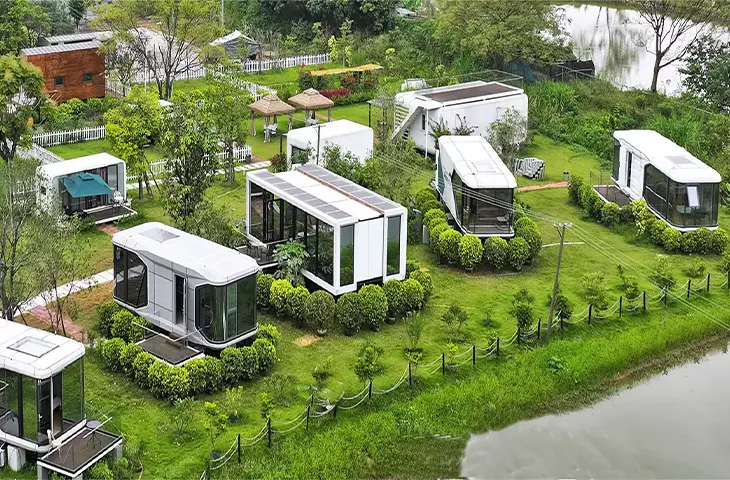
Safari reserves and wildlife parks face special safety challenges: proximity to animals, unpredictable terrain, and exposure to insects and weather.
Capsule lodging allowed operators to provide:
- Elevated sealed accommodations
- Superior sound insulation
- Secure rigid walls rather than fabric-based lodges
- Integrated airflow and filtration systems
Guests could watch wildlife safely from large panoramic windows, merging excitement and security into a single experience. Unlike traditional tents, capsules removed fears about wildlife encounters while preserving the immersive safari vibe.
Urban Pop-Up Tourism Concepts – Where Flexibility Matters
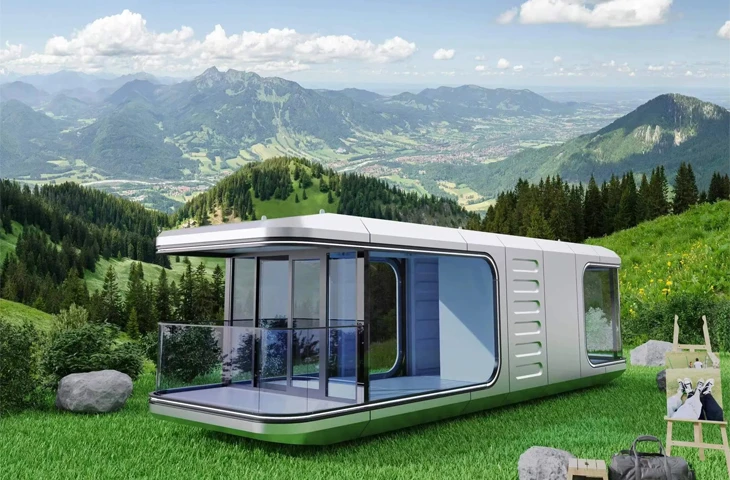
Aside from wilderness tourism, capsule houses are also appearing in urban travel accommodation models.
Temporary festivals, exhibitions, waterfront redevelopments, and cultural zones have deployed capsules as pop-up accommodation clusters. These short-term hospitality spaces benefit from capsule housing because:
- Units can be installed and removed within days
- Land does not require permanent conversion
- Operators avoid long-term lease risks
Capsule villages appear for seasonal tourist surges or event tourism then relocate as demand shifts — a business flexibility impossible with fixed hotels.
What All These Projects Have in Common
Across every real-world project we’ve supplied or studied, capsule houses succeed because they solve three consistent pain points for travel accommodation developers:
1. Construction Flexibility
Capsules eliminate long building timelines, skilled labor dependency, and large-scale site disruption.
2. Experiential Value
They multiply guest emotional engagement, supporting premium pricing and social-media-driven demand.
3. Sustainability Compliance
Minimizing land disturbance and resource use aligns projects with regulatory requirements and eco-tourism expectations.
This combination is why capsule construction is not a niche luxury trend, but a mainstream hospitality infrastructure evolution.
PodVoyager’s Role in Global Capsule Deployments
At PodVoyager, we manufacture capsule houses tailored for export under international compliance standards from our dedicated factory in Linyi, Shandong, China.
Our projects support:
- Luxury glamping resorts
- Eco-lodges
- Island resorts
- Safari camps
- Mountain retreats
- Pop-up hospitality developments
Every unit is built with:
- Structural engineering validation
- Climate-zone insulation customization
- Fully integrated electrical, plumbing, and HVAC systems
- Ruggedized transport packaging standards
We do not supply generic models; instead, each deployment is adapted to client site conditions and operational goals.
To explore capsule deployment opportunities for your tourism project, please visit:
Conclusion – The Accommodation Revolution Is Already Here
The global hospitality industry is quietly undergoing transformation.
Hotels are becoming experiences. Resorts are becoming architecture. Travel is becoming immersive storytelling — and capsule houses are emerging as the new stage upon which those stories are told.
What once seemed futuristic or experimental is now a proven, revenue-generating, environmentally compliant accommodation solution actively deployed worldwide.
From mountain peaks to island shores, deserts to forests, urban festivals to safari parks — capsule houses are changing how the world stays while traveling.
At PodVoyager, we consider ourselves fortunate to be at the heart of this revolution, helping tourism developers transform visionary concepts into physical reality.
If your next hospitality project demands originality, sustainability, speed, and long-term profitability, a space capsule housing solution may be the answer you’re searching for.
Start with us today:
